Rocky Beers hurdle touchdown in the season opener did more than produce a highlight reel moment; it signaled a substantive shift in Oklahoma’s tight end room and how the Sooners can disguise personnel packages.
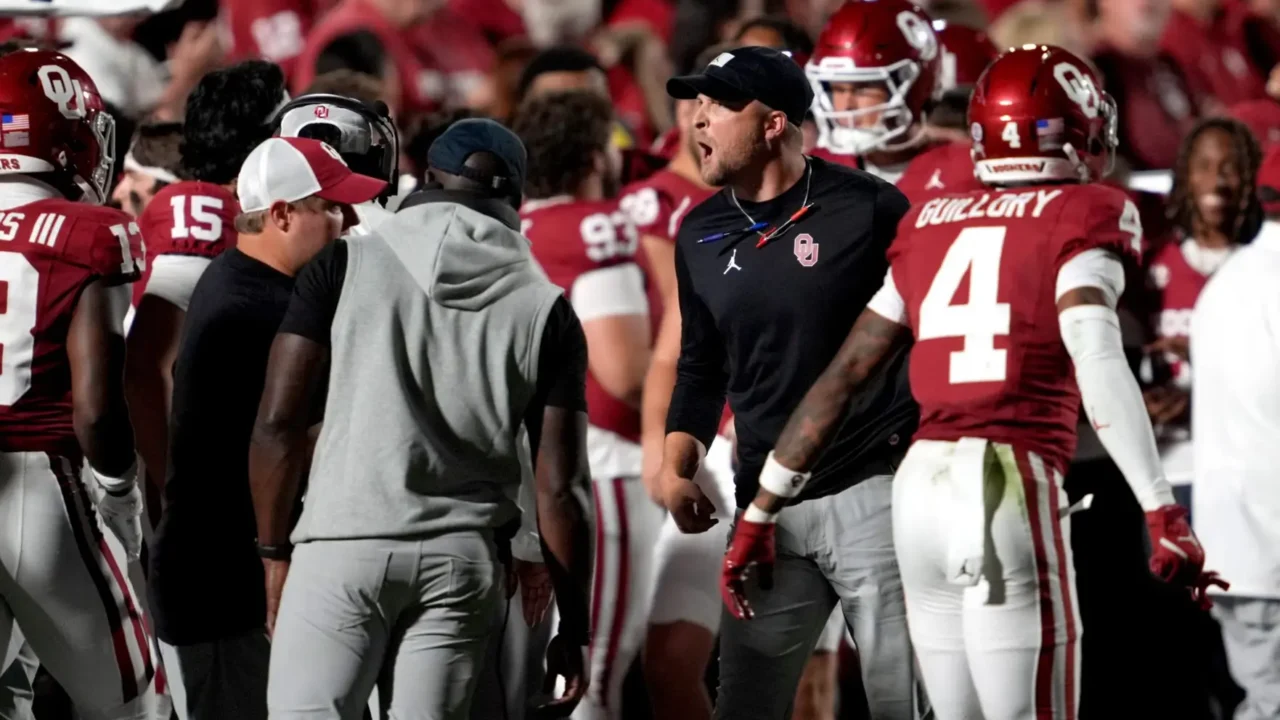
As reported by A to Z Sports, Beers finished the opener with two catches for 43 yards and a touchdown, and Oklahoma offensive coordinator Ben Arbuckle’s sideline reaction underscored how the staff views the new pickup. That reaction and the play itself both matter because they highlight immediate on-field value from a transfer the staff targeted for multi-phase usage.
Key Takeaways
- Rocky Beers had two catches for 43 yards and a touchdown in the season opener.
- Beers is a 6-foot-5, 240-pound transfer from Colorado State by way of Florida International and Air Force.
- The Sooners now have multiple tight ends who can both run block and catch, which alters opposing defenses’ planning.
Rocky Beers hurdle touchdown reshapes the tight end room
Beers arrived in Norman with a profile the staff liked: length, athleticism and a background that includes stops at Colorado State, Florida International and Air Force. That mix showed up on the opening drive when John Mateer hit him in stride and Beers turned a routine touchdown into a highlight by hurdling a defender before crossing the plane.
Ben Arbuckle captured the emotion on the sideline and in his postgame comments:
“I was going crazy whenever Rocky caught that touchdown because I was excited. The hurdle was cool. I mean, the hurdle was awesome, but I was just sitting there like, holy crap.”
“He ran an awesome route. It was good coverage for the specific call, but he ran an awesome route, made the play, got going down the sideline, and he hurdled a guy for a touchdown.” That quote matters because play-callers and position coaches value moments that display both route timing and physical competitiveness.
How the touchdown unfolded
The scoring play began with Mateer delivering an in-stride pass while Beers used his length to separate and accelerate down the sideline. Beers caught the ball in rhythm, turned upfield and cleared a would-be tackler with an athleticism display that completed the sequence.
The result was the game’s highlight and an instant demonstration that the Sooners can marry a receiving threat to traditional in-line responsibilities. That duality is what the staff was clearly buying when they pursued tight end talent in the transfer window.
Tight end comparison and opener production
| Player | Size / Background | Opener production / Role |
|---|---|---|
| Rocky Beers | 6-5, 240; transfer from Colorado State via Florida International and Air Force | 2 catches for 43 yards and a touchdown; showed receiving ability and athleticism on the hurdle play |
| Hayden Hansen | 6-7; former Florida tight end | Caught one pass for 15 yards and is noted as a strong run blocker who can be a factor in the pass game |
| Jaren Kanak | Returning receiving tight end from last season | Primary receiving threat a season ago but was described as limited as a run blocker, which impacted personnel grouping |
How Oklahoma’s tight end depth changes SEC game planning
From an opponent’s perspective, having two tight ends who can both block and catch creates more uncertainty about personnel groupings and play intent. Defenses that keyed on predictable packages when a pass-only tight end was on the field now must account for multiple looks that can support both the run and the pass.
On a roster and recruiting level, the early production from a transfer like Beers validates a strategy of targeting multi-role tight ends capable of immediate contributions. Those kinds of fits can influence how the Sooners allocate reps, design two-tight sets and leverage play-action in league games.