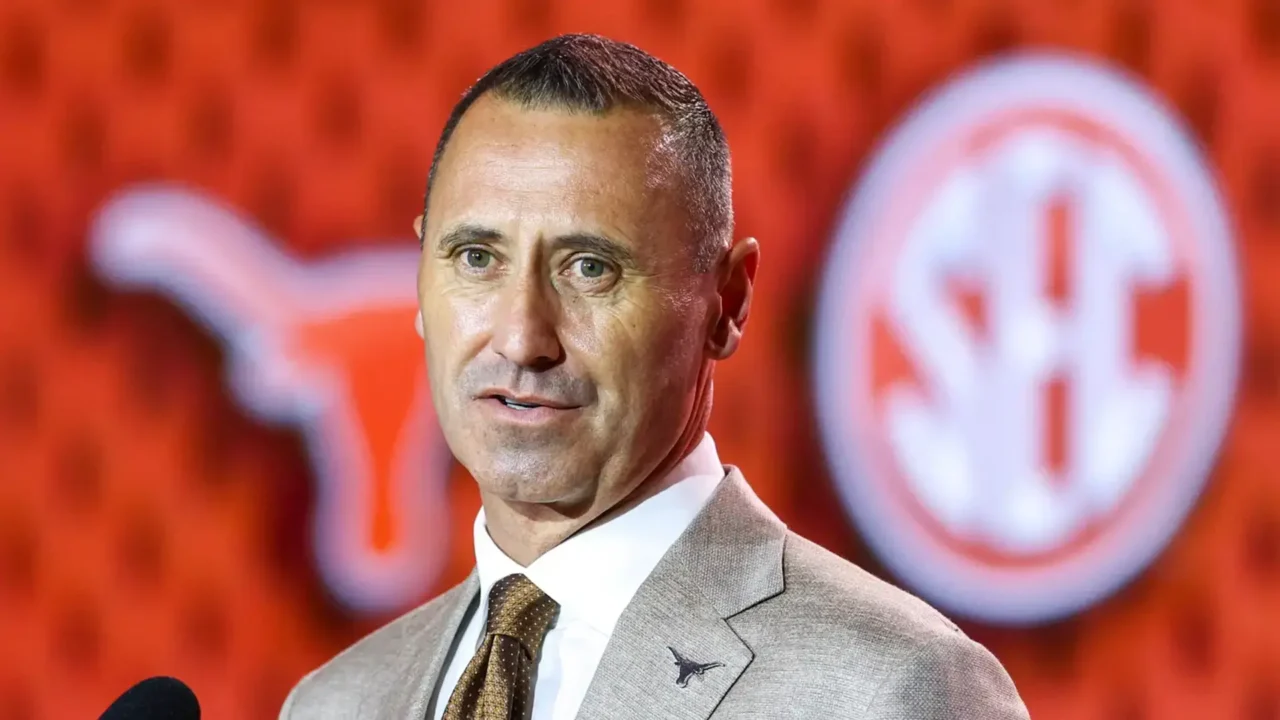
Steve Sarkisian framed the fallout from Texas’ dramatic comeback as a broader argument about how the College Football Playoff committee weighs close, high-profile nonconference games. The Longhorns erased a 20-point fourth-quarter deficit to beat the Ohio State Buckeyes and moved to the top spot in the AP Poll.
In assessing the postseason picture and the value of marquee matchups, Sarkisian said the committee should give credit where it’s due, not penalize teams for tight losses in difficult environments as he laid out in comments to reporters and in the reporting by Texas Longhorns On SI. He specifically referenced Ohio State’s one-point loss decided with 25 seconds remaining as the kind of result that the committee should view in context.
Key Takeaways
- Texas rallied from a 20-point fourth-quarter deficit to defeat Ohio State and moved to No. 1 in the AP Poll.
- Steve Sarkisian said the CFP committee should not punish Ohio State for a one-score loss decided late in Austin.
- No team with a 9-3 record has previously been selected for the College Football Playoff.
- Texas will wrap up nonconference play against UTSA before beginning its SEC schedule.
Steve Sarkisian on CFP subjectivity
Sarkisian framed the playoff debate around human judgment and precedent rather than purely objective metrics. He argued that because the CFP is decided by people, the committee should factor in context such as travel, weather and the quality of the opponent when evaluating a close loss.
He was blunt about Ohio State’s performance in Austin, noting the Buckeyes lost 24-23 with 25 seconds left and that the environment — he said it was 100 degrees in September — made the game a tough assignment for a nonconference opponent. Sarkisian pointed to his past stance when Texas itself was 9-3 and argued those same considerations apply to other programs.
How the comeback reshapes Texas momentum
The victory in Austin is one of the highest-profile wins of Sarkisian’s time at Texas and changes the narrative around the program heading into conference play. Coming back from a 20-point deficit in the fourth quarter underlines both roster depth and in-game adjustments that will be referenced by opponents and recruits.
Beyond morale, the win places the Longhorns squarely in the national conversation and creates immediate pressure to sustain performance through the UTSA game and into a demanding SEC slate. Sarkisian stressed that while the Buckeyes’ playoff fate isn’t Texas’ concern, the program must still take care of its own business.
Game turning points and roster implications
The fourth-quarter rally exposed both resilience and areas for continued evaluation on Texas’ roster. Players who stepped up late in the game will receive deserved attention from the fanbase and local recruiting contacts, and the staff will use the victory as evidence of the program’s capacity to finish games at the highest level.
From a roster-construction viewpoint, wins over Power Five opponents in hostile environments are the kind of moments that help with recruiting conversations and internal belief, even as coaches caution against reading too much into a single result. Sarkisian tied that dynamic to his plea to the CFP committee: reward teams for seeking out those matchups rather than penalizing them for narrow defeats.
9-3 teams and CFP precedent
| Scenario | Context |
|---|---|
| Teams finishing 9-3 | No team with a 9-3 record has previously been selected for the College Football Playoff, which makes a 9-3 case historically difficult. |
| Winning a conference | Sarkisian noted that winning a conference provides a clearer path to the playoff because it removes some subjectivity from committee judgment. |
| Playing premium nonconference tests | High-profile neutral or true road games against top opponents can influence committee perception if results and context are taken into account. |
CFP fallout and SEC road ahead
The immediate CFP fallout centers on how the committee values one-score road losses against Power Five opponents and whether those games will be rewarded in borderline cases. For Texas, the immediate task is clear: close out nonconference play at UTSA and shift focus to an SEC schedule that will present multiple profile tests.
Sarkisian’s comments also carry recruiting implications across the region; coaches will point to marquee wins when courting prospects and to the program’s ability to compete at the highest level. If the committee follows the line Sarkisian advocates, that could change incentives around scheduling and the perceived risk of playing elite nonconference opponents. Reporting by Zion Trammell.