The Texas A&M non-conference slate matters because those three games are strategically placed to reveal answers about the offensive line and to give new coordinators live reps before SEC play.
As outlined by Texas A&M Aggies On SI, the Aggies open with Missouri State, follow with Arizona State, and slot The Citadel in as a midseason reset.
Key Takeaways
- The Texas A&M non-conference slate provides early, controlled tests that should help the staff evaluate personnel and schemes on the field.
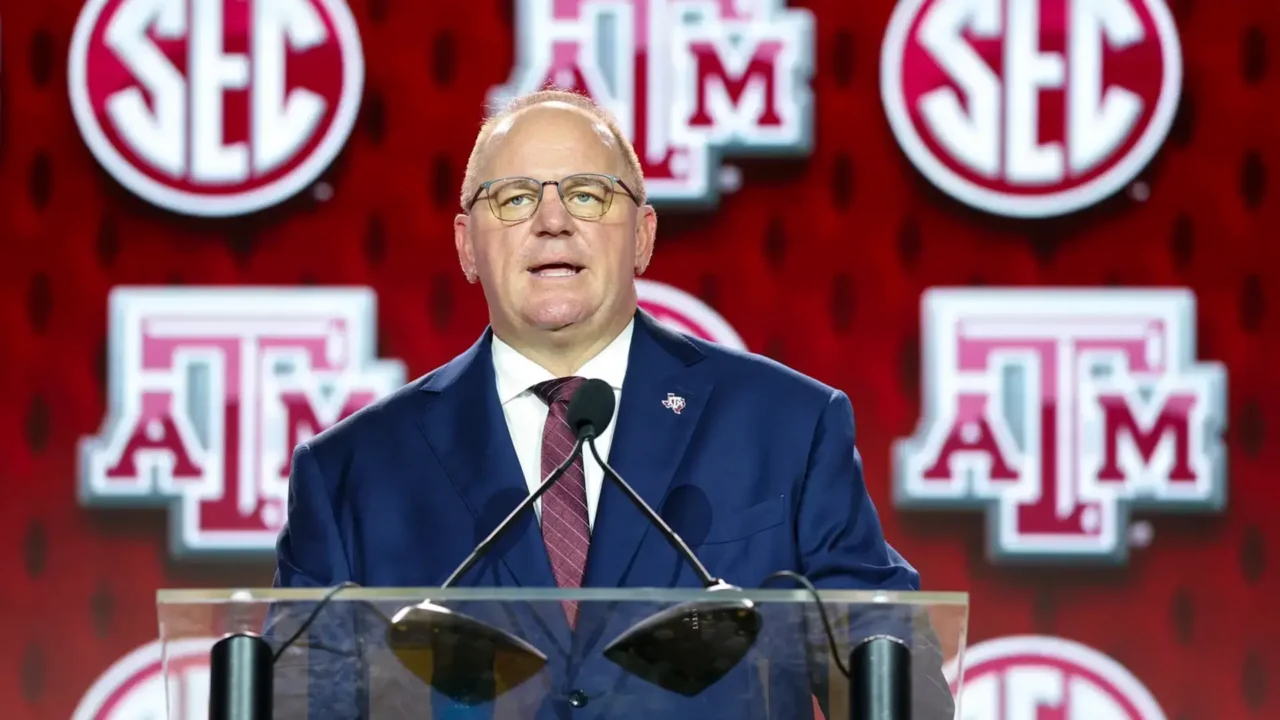
- Elko faces a pressing offensive line question entering the season because the unit returns only one player from a year ago.
- Arizona State represents the toughest non-conference test while The Citadel around Oct. 17 functions as a potential midseason reset.
Offensive line questions and early evaluation
The most immediate roster storyline coming out of fall is the offensive line picture, which returns a single player from last season’s unit.
That limited continuity turns Week 1 evaluation into more than warmup work; the first game will be the first real assignment to see how line calls, personnel groupings and protection schemes hold up under game speed.
Mike Elko and his staff will use the opener to test combinations, identify who can handle starting reps and prioritize matchups to protect the quarterback while new coordinators get their first live-game looks.
Texas A&M non-conference slate evaluation
The season-opening matchup against Missouri State is built to be a live evaluation of the roster coming out of fall camp and offers controlled in-game reps for young and new starters.
Week 2 brings Arizona State, which finished 8–5 last season and is undergoing personnel turnover and broader transition under Kenny Dillingham; that makes the Sun Devils the stiffest non-conference opponent on paper.
Playing Arizona State one week before SEC openers against Kentucky and LSU means the Aggies must be ready quickly, as any remaining uncertainty will be exposed once the league schedule begins.
The Citadel arrives around Oct. 17 and occupies a pivotal spot as a potential reset before a demanding final five-game run; the timing gives staff a chance to correct course and re-calibrate rotations.
Across all three games the baseline expectation is simple: outmatching opponents on paper is not enough—everything still must be settled on the field.
Non-conference opponents comparison
| Opponent | Recent note | Coach | Role for Texas A&M |
|---|---|---|---|
| Missouri State | Season opener used for live evaluation | Not specified | Week 1 evaluation for line, depth and new coordinator reps |
| Arizona State | Finished 8–5 last season and is in transition | Kenny Dillingham | Toughest non-conference test and dress rehearsal for SEC openers |
| The Citadel | Scheduled around Oct. 17 at midseason | Not specified | Midseason reset before a final five-game SEC stretch |
How the non-conference slate affects SEC path and CFP hopes
Timing is the primary competitive edge of the non-conference slate: early games aim to answer personnel questions while the midseason slot versus The Citadel can provide a momentum pivot before facing Alabama South Carolina Tennessee Oklahoma and Texas.
These three games give the staff opportunities to preserve depth, manage injuries and test younger players in lower-risk environments while preparing for a gauntlet of SEC opponents in College Station and on the road.
Handling the non-conference slate cleanly keeps Texas A&M from bleeding confidence or health ahead of league play, which is a practical step toward keeping College Football Playoff hopes intact, and reporting here draws from the linked report above.