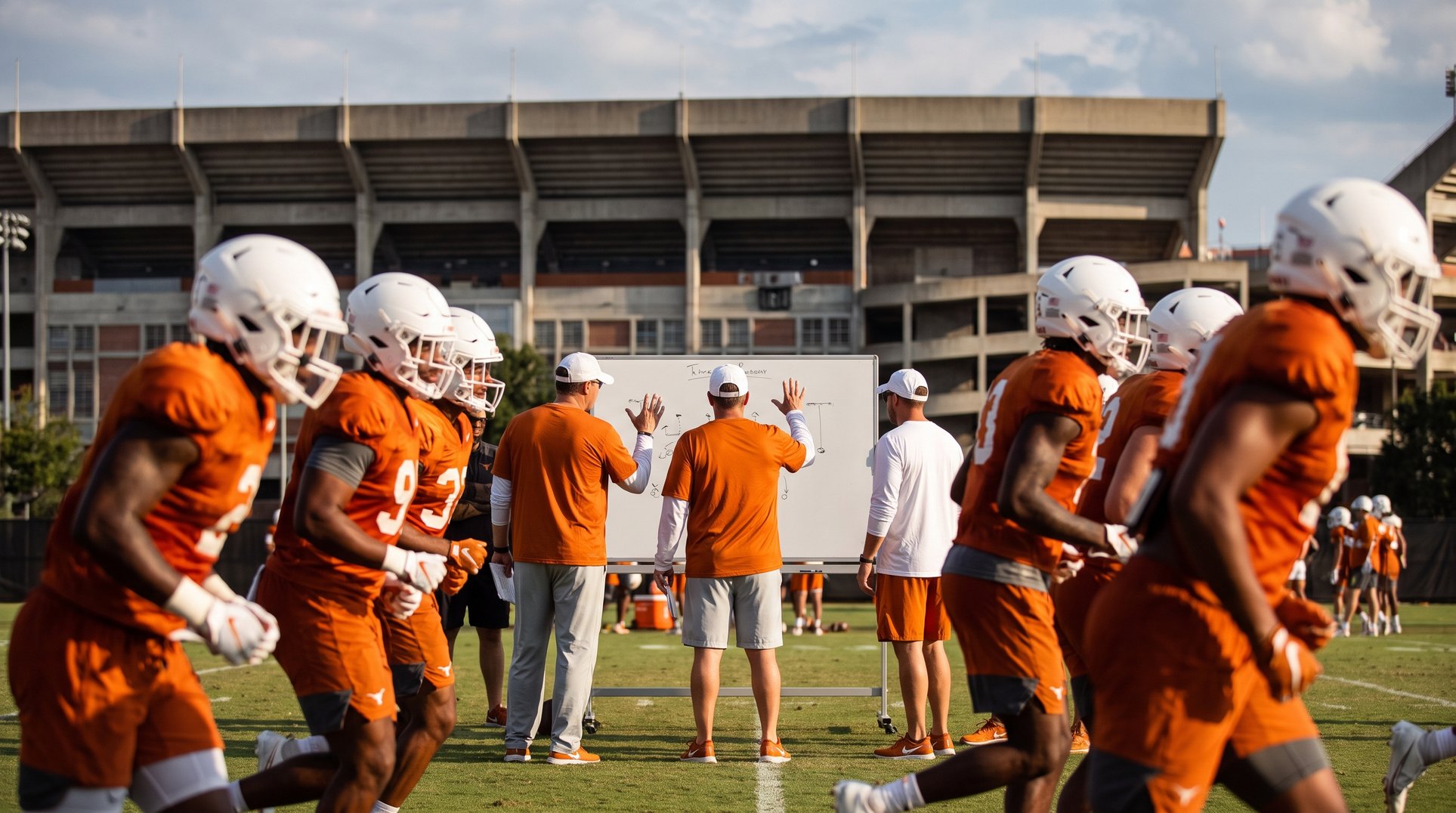
Texas defense under Muschamp is the single most consequential storyline for the Longhorns’ opener after 222 days of offseason work. The staff and players say the unit carries a new, aggressive tone that needs to show up on tape when the stadium fills and the whistle blows.
Reporting in The Daily Texan highlights how coaching changes, veteran leadership and a different meeting-room punch have set expectations higher than a year ago.
Key Takeaways
- Will Muschamp’s arrival has been framed as a push to add aggressiveness and a harder tone to the defense.
- Fall camp and scrimmages produced repeated reports that the defense has improved intensity and buy-in from players.
- Last season’s defense ranked sixth in the Southeastern Conference in scoring and needs greater consistency to reach higher goals.
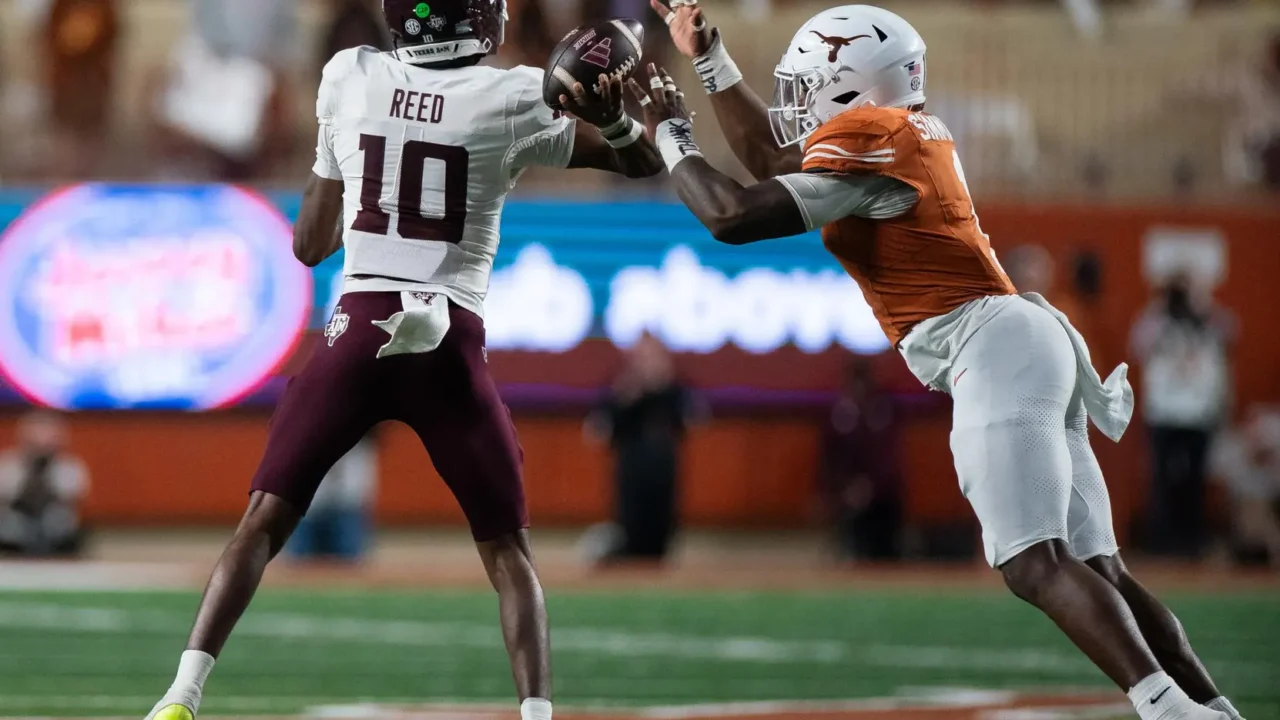
- Junior edge Colin Simmons and returning veterans are positioned to show early progress on game tape.
Texas defense under Muschamp takes shape
Muschamp returned to Texas with a reputation for physical, attack-minded units; his previous stint at the program from 2008 to 2010 is part of that profile. The staff’s stated intent was to inject more “in your face” mentality and create havoc for opposing offenses.
Players and coaches repeatedly described a different tone in meetings and practice. One veteran edge called the approach “aggressive,” adding that coaches demand players be “10 toes down, on your feet” and ready to compete every snap.
That tone is not just motivational language: sources in camp credited a combination of transfers, experienced starters and scheme emphasis for improving consistency against the offense in scrimmages. Coaches noted the group still has room to improve, but they saw meaningful growth compared with early camp reports from prior cycles.
Who to watch and roster impact
Colin Simmons emerged as a vocal example of the cultural shift, visiting Muschamp’s office when the coordinator arrived and hearing a straightforward message to be himself and play with joy. Simmons later said this was his first time seeing that specific tone from coaches and teammates.
Returning production and leadership are central to how the unit is expected to perform. Multiple players and coaches said the defense is full of what staffers call “alphas,” and that leadership helped accelerate installation of the new scheme during camp.
Scrimmage evaluations pointed to clearer role definitions across the front seven and secondary. Those positional clarifications are designed to speed decision-making on the field and reduce the inconsistency that plagued the unit last year.
Fall camp comparisons to last season
| Area | Camp reporting | Last season facts |
|---|---|---|
| Consistency | Coaches reported improved consistency in scrimmages and more buy-in to the scheme | Unit showed game-to-game swings that affected outcomes |
| Tone and approach | Players described a new, aggressive tone in meetings and practice | Leadership and approach varied through the previous season |
| Scoring defense | Coaching emphasis aimed at reducing opponent scoring through pressure and physicality | Finished sixth in the Southeastern Conference in scoring |
How camp performance maps to game expectations
Camp tape and scrimmage notes are encouraging, but multiple voices in the program stressed that practice success must be validated in live-game conditions. Players and staff repeatedly used the same metric: put it on tape.
That translation will hinge on tempo, third-down execution and how quickly the unit can sustain pressure without lapses. The staff’s goal is to force more negative plays and change opponent play-calling rhythm, not simply accumulate flashy individual numbers.
SEC and CFP stakes for Texas defense
The unit’s trajectory has direct consequences for Texas’s standing in the Southeastern Conference and for national positioning. A more consistent, aggressive defense would not only improve win probability in conference games but also strengthen the program’s message to recruits about identity and toughness.
Because last season’s scoring defense ranked sixth in the conference, meaningful year-over-year improvement would be a visible signal for roster construction and recruiting conversations. Players and staff framed the new identity as a lever for attracting like-minded prospects and for helping the overall team profile in big nonconference matchups.
Local coverage first laid out these camp observations and quotations in the linked reporting cited earlier.