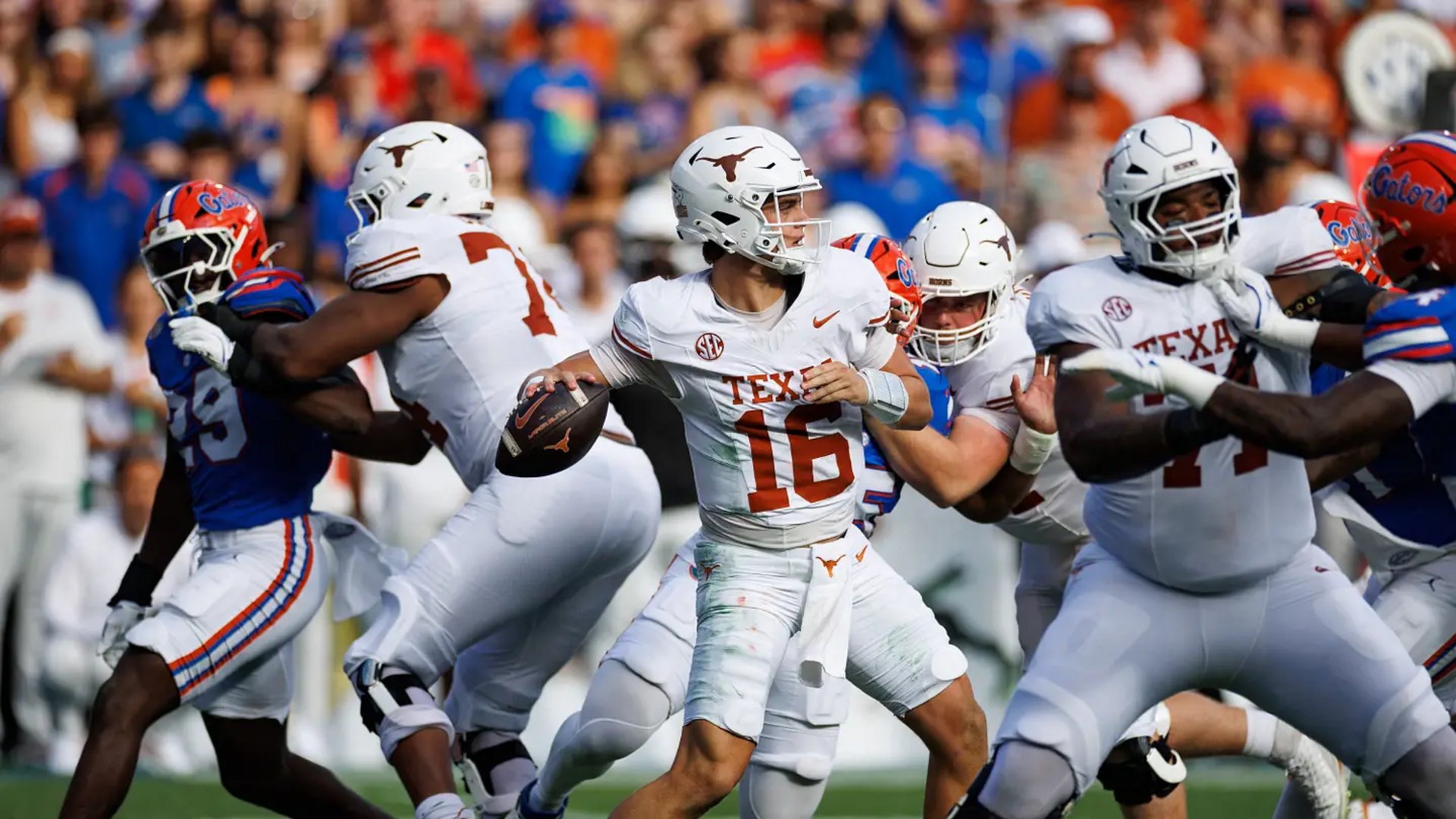
The Texas Longhorns running game faces an immediate live test in Week 1 against the Texas State Bobcats that will shape early-season narratives for roster construction and playoff hopes.
As outlined by Texas Longhorns On SI, Texas arrives with a nearly brand-new backfield and clear expectations that the rushing attack must rebound after a poor showing a year ago under the current staff.
Key Takeaways
- The Longhorns open with three returning running backs, two transfer additions and a five-star freshman who all must reenergize the rushing attack.
- Transfers Raleek Brown and Hollywood Smothers bring established big-play explosiveness that should immediately change game-plan possibilities.
- A retooled offensive line is expected to open more lanes, creating the conditions for longer runs and improved tempo.
- The coaching staff must intentionally establish the running game early to let new and returning ballcarriers find rhythm and create explosive plays.
How the new backs differ and what each offers
The transfer additions and incoming freshman reshape the backfield profile with complementary traits rather than a single identical fit.
Raleek Brown and Hollywood Smothers arrive as proven burst players who created chunk plays at their previous stops, while the returning pieces provide continuity and special-role flexibility.
Raleek Brown defined himself as an explosive option at his previous program, totaling a dozen rushing plays of 20 yards or more and delivering an 88-yard touchdown run that highlighted his home-run ability.
That level of playmaking contrasted with Texas’ team output in longer runs last season, a comparative detail the staff hopes to change immediately.
Hollywood Smothers supplied similar traits at his last school, with nine carries of 20 or more yards and several long-touchdown bursts, including a 65-yard score.
Smothers projects as a vertical-threat back in space and on designed reads, creating a secondary avenue for chunk gains beyond inside zones and counters.
The additions pair with freshman Derrek Cooper, who offers a distinctly downhill, contact-driven running style that contrasts the transfer duo.
Cooper’s profile gives the Longhorns an interior, north-south option on early-down work and short-yardage situations.
Ryan Niblett and the other returning backs round out a room that now mixes open-field jumpiness with interior power.
Niblett proved in 2025 that he can change games in space, and coaches can leverage that trait on screens, swing passes and zone-stretch concepts to create seams for the more explosive carriers.
What the offensive line changes mean for space and tempo
The offensive line work this offseason is central to any sustained improvement.
The retooled line should increase crease sizes and sustain blocks long enough for explosive backs to hit long runs, which Texas lacked last season.
Play-calling will determine whether the upgrades translate to consistent production.
Schemes that mix inside zone, power looks and perimeter stretch concepts will play to the varied strengths in the backfield and allow tempo to become an offensive asset rather than a liability.
Early-down success matters beyond yardage because establishing a physical ground game will help the offense control possessions, shorten opponent drives and open the play-action window for more vertical passing.
Texas Longhorns running game roster comparison
| Group | Experience / Profile | Expected role |
|---|---|---|
| Transfers (Raleek Brown, Hollywood Smothers) | Proven big-play performers; Brown produced multiple 20-plus yard runs including an 88-yard TD and Smothers had multiple long runs including a 65-yard TD | Primary explosiveness options in space and on designed vertical runs |
| Returning backs | Three returners provide continuity and situational versatility, including a player who showed open-field playmaking in 2025 | Situational work, change-of-pace snaps, and routes/screens to exploit defenses |
| Freshman (Derrek Cooper) | Highly regarded incoming back with a downhill, contact-driven running style to complement perimeter explosiveness | Early-down work, short-yardage and interior power carries to balance the backfield |
How early rushing success reshapes SEC positioning and College Football Playoff hopes
A restored rushing attack has outsized implications for SEC positioning and for College Football Playoff positioning because it changes time of possession dynamics and down-and-distance scenarios for the passing game.
Recruiting chatter and roster construction will follow visible early returns, tightening the depth chart picture if the new backfield produces as expected.
From a CFP lens, a credible run game strengthens arguments about offensive balance and can improve Texas’ margin for error in conference play.