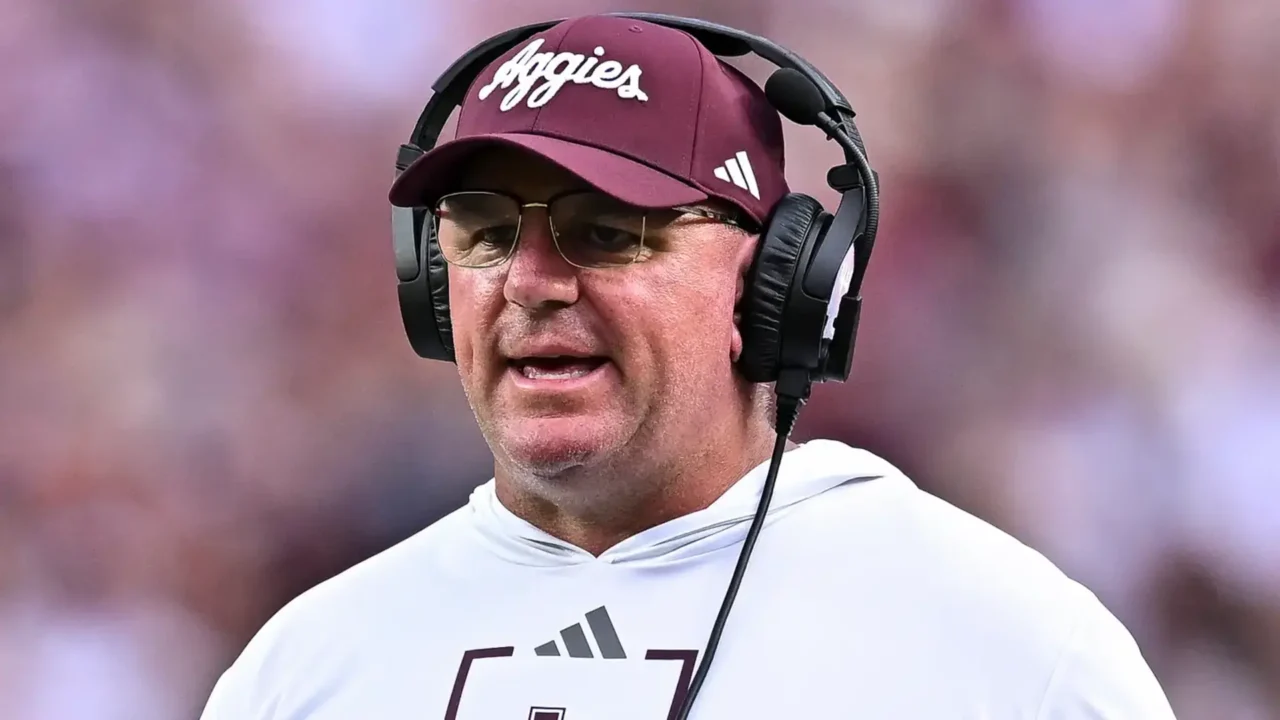
Mike Elko held team captain Daymion Sanford out of Texas A&M’s 50-0 season opener at Kyle Field.
Sanford suffered a fibula injury in the spring game, warmed up before kickoff but did not play as coaches prioritized his recovery, according to Texas A&M Aggies On SI.
Key Takeaways
- Daymion Sanford suffered a fibula injury in the spring game and described it as the worst pain of his life.
- Sanford warmed up against Missouri State but was held out as coaches prioritized his long-term recovery.
- Doctors told Sanford in late July the fibula injury would not be season-ending, but Elko said he wanted Sanford to be “really ready” before returning.
- Backups preserved a shutout while holding Missouri State to 18 yards of offense in the second half, reducing the need to risk Sanford in Week 1.
Why Elko held Daymion Sanford out
Sanford characterized the spring-game break as gruesome and said it was the worst pain of his life, which shaped the staff’s cautious posture.
Elko had expressed hope the timeline could be early but emphasized he would only clear Sanford when he was really ready, a stance that removed pressure in a lopsided opener.
How A&M defense performed without Sanford
The defense rotated younger options and leaned on situational reps while preserving fundamentals in a blowout.
Backup defenders such as Cutter Boley and Andrew Hughes saw situational snaps, and Missouri State managed just 18 yards of offense in the second half.
Sanford injury and timeline context
| Event | Status | Notes |
|---|---|---|
| Fibula injury in spring game | Occurred | Sanford characterized it as gruesome and extremely painful |
| Preseason medical update | Not season-ending | Doctors told Sanford in late July the injury would not end his season |
| Week 1 vs Missouri State | Warmed up, did not play | Coaches held him out while backups preserved a shutout |
| Availability for Arizona State (Week 2) | Uncertain | Return timeline described as potentially early but dependent on medical markers |
What Sanford’s availability means for SEC tests
Arizona State in Week 2 is an immediate barometer; the staff’s Week 1 decision gives medical staff time to clear him without forcing a low-stakes appearance.
A sooner return stabilizes the linebacker corps for early Power Four matchups, reduces pressure on situational packages and helps the staff prepare for run-heavy conference opponents.