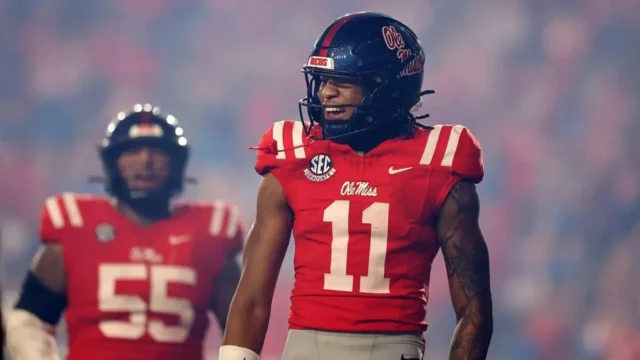
LSU vs. Ole Miss has every element of a defining early-season SEC game: two top-10 teams, a high-profile coaching return, and a quarterback question that could reshape both play calls and expectations. This matchup at Vaught-Hemingway Stadium carries outsized College Football Playoff implications because the winner will have early inside positioning among the league elite.
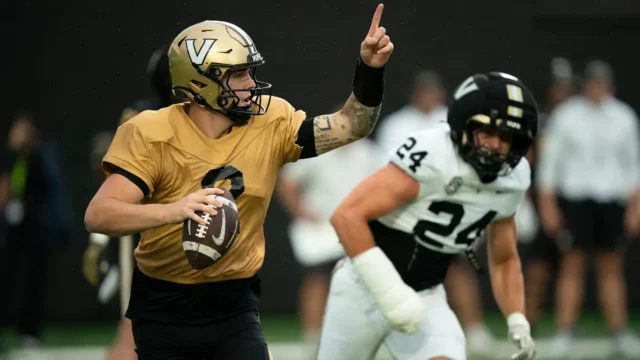
LSU listed starting quarterback Sam Leavitt as doubtful on the initial SEC injury report, and Matt Zenitz’s practice notes showed Leavitt did not throw at Wednesday’s session before taking part in Thursday’s walkthrough, as reported by CBS Sports. Ticket demand and an expected raucous atmosphere around Lane Kiffin’s return have prompted added local police reinforcements and a secondary-market get-in price north of $500.
Key Takeaways
- LSU faces Ole Miss in Oxford in a top-10 SEC showdown that will shape early College Football Playoff trajectories.
- LSU listed starting quarterback Sam Leavitt as doubtful after limited throwing at midweek practice.
- Lane Kiffin returns to Vaught-Hemingway Stadium amid heightened ticket demand and added local security measures.
- If Leavitt cannot play, LSU’s primary backup is Elon transfer Landen Clark, who offers dual-threat experience.
LSU vs. Ole Miss quarterback status
The injury designation and practice reports make Sam Leavitt’s availability the single largest on-field variable entering Week 3. Leavitt did not throw at Wednesday practice while dealing with an upper-body issue but participated in the team’s Thursday walkthrough, leaving the situation listed as doubtful on the initial SEC report.
LSU’s contingency plan is straightforward on paper: the primary backup is Landen Clark, an Elon transfer who produced nearly 3,000 yards and earned CAA Co-Offensive Rookie of the Year honors last season as a dual-threat playmaker. Game-planning for Clark versus Leavitt would shift LSU’s approach; Leavitt’s presumed starting skill set supports a more traditional timing-based attack, while Clark’s mobility expands designed quarterback runs and RPO leverage.
Coaches will have to balance practice reps and film study against the reality of a charged environment in Oxford, where crowd noise and matchup stress can accelerate conservative play-calling if the team lacks the usual starter’s reps. Special-teams alignment and short-yardage packages become more important in a game where the quarterback spot is unsettled.
Coaching rematch Kiffin returns to Oxford
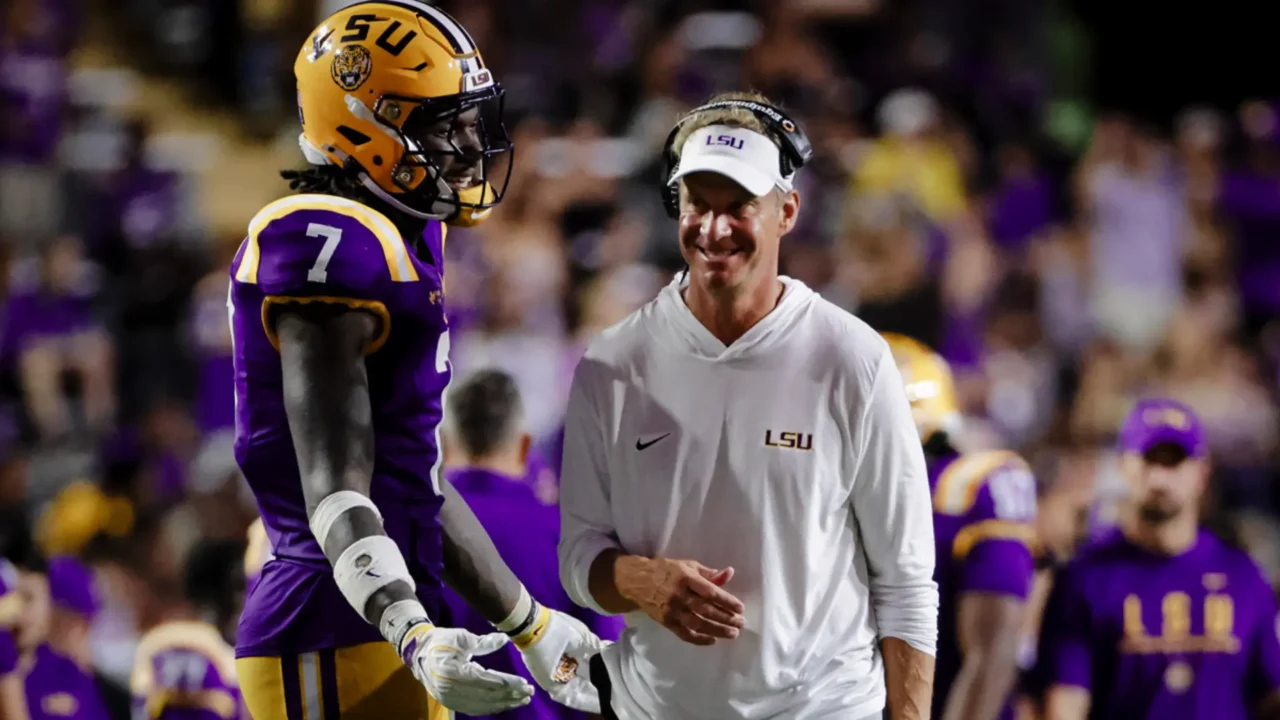
The narrative around this game is amplified by Lane Kiffin’s return to the stadium where he previously coached, a storyline that has driven interest and security planning. Kiffin’s familiarity with Ole Miss personnel and the program’s recent trajectory adds a strategic edge to the matchup and intensifies local emotions surrounding the game.
The matchup also features layered staff dynamics that will affect play design and adjustments. Charlie Weis Jr. is now calling LSU’s offense after previously serving as Ole Miss’s offensive coordinator, creating a chess match in which schematic familiarity and past collaboration will influence in-game tendencies.
This is the first top-10 matchup between the programs since 1962.
Those coaching ties mean adjustments could come quickly and with specificity, particularly in the early series where both staffs will test known tendencies. The combination of a familiar opponent and a volatile quarterback situation raises the importance of third-down efficiency and turnover avoidance.
Top-10 stakes and game context
| Contextual Factor | LSU | Ole Miss |
|---|---|---|
| Rank and early record | No. 7 and 2-0 after Week 1 ACC win and Week 2 Group of Six win | No. 8 and 2-0 after Week 1 ACC win and Week 2 Group of Six win |
| Quarterback availability | Sam Leavitt listed as doubtful; did not throw Wednesday but was at Thursday walkthrough. Primary backup: Landen Clark. | Projected starter available and part of the matchup focus that coaches prepared for. |
| Coaching and staff notes | Charlie Weis Jr. serving as offensive coordinator after time with Ole Miss offense. | Familiar defensive staff themes and prior work under the returning coach sharpen game-planning. |
| Marketplace and environment | Secondary get-in price at or above $500 and local police reinforcements added for return visit. | Home-field intensity at Vaught-Hemingway Stadium with ticket surge and a rowdy setting expected. |
College Football Playoff and SEC pecking order
The winner walks away with a marquee résumé boost and improved CFP positioning because both teams entered the game winless in conference play and already ranked in the top 10 for the first time since 1962. Each program can point to a signature Week 3 victory as proof of staying power among SEC contenders, and that single result will matter to selection committees and perception-driven recruiting narratives.
Beyond playoff seeding, the game’s result will reverberate through SEC recruiting conversations and roster construction messaging for months. A win for the home team strengthens the argument that its recent program-building trajectory is sustainable, while a road victory will be framed as immediate validation of direction and scheme fit for the visitors.
SportsLine’s computer model produced simulations for every Week 3 matchup and is part of the preview conversation around expected outcomes, but models supplement rather than replace the practical coaching and roster decisions that unfold across four quarters. The environmental factors in Oxford, the quarterback question for LSU, and schematic familiarity between staffs are the decisive human elements that no model fully captures.
Reporting in this piece draws from the linked preview and referenced model projections from SportsLine while adding local context on ticket demand and security planning as the teams prepare for a high-stakes SEC clash.