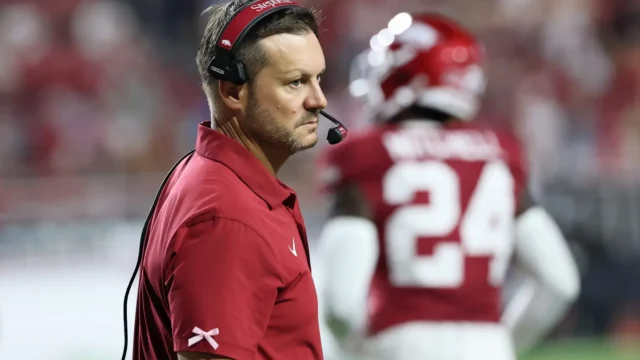
The LSU injury crisis has become an immediate roster problem for a team trying to climb back toward championship contention.
Lane Kiffin publicly tied that surge of ailments to the conference’s new 9-game schedule in comments captured by ESPN’s Marty Smith, and reporting that follows has cataloged several specific injuries and recovery windows, as detailed by Saturday Down South.
Key Takeaways
- LSU improved to 3-1 overall and 1-1 in SEC but faces roster stress after multiple injuries to key players.
- Lane Kiffin attributed the injuries to the SEC’s move to a 9-game conference schedule, a claim reported through national outlets.
- Linebacker Whit Weeks suffered a fracture in his right leg and is scheduled for surgery with a hopeful 4–6 week return window reported.
- Tight end Trey’Dez Green was hurt at Ole Miss and LSU’s current goal is to have him available by Week 10.
Why the LSU injury crisis widened
Saturday’s win over Texas A&M offered a necessary boost in the standings, but the physical toll on LSU’s roster was hard to miss.
The Tigers now sit inside the AP Top 25 while trying to patch rotation holes and protect starters for the next wave of conference games.
Whit Weeks left the Aggies game wearing a boot, and reporting indicates he suffered a fracture in his right leg that will require surgery; the working hope is a 4–6 week recovery window pending surgical outcome and rehab progress.
The loss of Weeks removes a veteran presence from the linebacker group and forces younger players into expanded snaps on special teams and defense.
Trey’Dez Green’s injury in the Week 3 loss at Ole Miss remains another roster complication, with the program’s current aim to have him available by the Week 10 matchup against Alabama.
Each high-impact absence compounds issues at positions where scheme reps and continuity matter most in SEC play.
Coaching response and the SEC schedule debate
Lane Kiffin framed the situation as a symptom of the conference’s expanded schedule, arguing the 9-game slate magnifies wear-and-tear compared with conferences that play fewer league games.
That line of critique centers on exposure to contact across more high-intensity weeks, though causation between a single team’s injuries and a scheduling shift remains an opinion and is not proven by roster reports alone.
Coaching staffs and medical teams will continue to triage practice loads and make snap-by-snap decisions to mitigate further losses while maintaining competitive preparation.
Injury status and timelines
| Player | Injury | Reported source | Recovery or return note |
|---|---|---|---|
| Whit Weeks | Fracture in right leg | Matt Zenitz reporting | Surgery required; hope is a 4–6 week return window pending surgical outcome |
| Trey’Dez Green | Injury sustained at Ole Miss | Matt Zenitz reporting | Team’s current hope is availability by Week 10 |
SEC and CFP implications for LSU’s season
Short-term absences can have outsized effects in a 9-game conference race where every league tilt carries heavier weight for standings and College Football Playoff positioning.
Missed snaps against top-tier opponents reduce margin for error as the schedule tightens, and depth questions will shape how the Tigers allocate reps in upcoming weeks.
LSU’s immediate path includes a home nonconference game against McNeese that presents an opportunity to reshuffle reps and rebuild depth before returning to consecutive SEC tests.