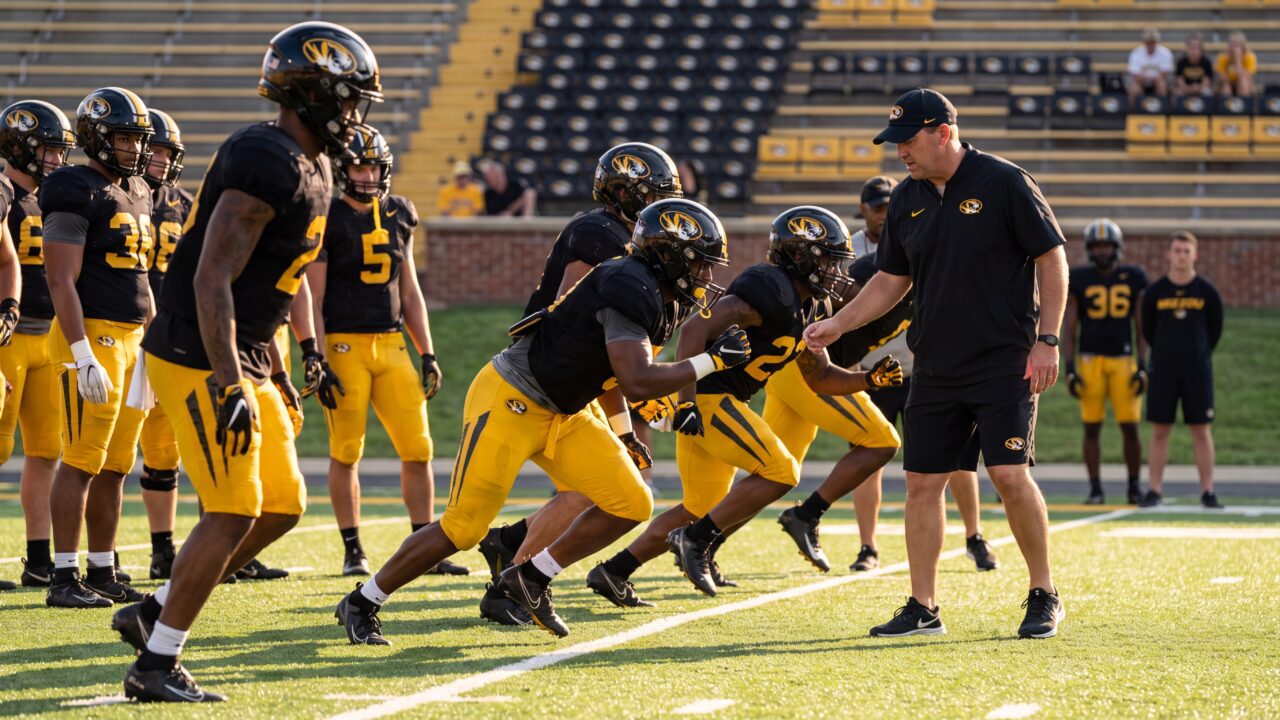
The Mizzou running backs room has drawn attention in early position previews as a group that could define the Tigers’ offensive identity. The depth and role distribution in the backfield will determine how Missouri attacks defenses and how the roster absorbs attrition during the season.
One early position look is available from Sports Illustrated and it frames the key questions for the Tigers’ ball carriers heading into the season.
Key Takeaways
- The Mizzou running backs group is being evaluated primarily on depth and role clarity for start-of-season rotations.
- Expectation management is central, with the position preview emphasizing how usage plans could shift game to game.
- The backfield composition will influence third-down packages and short-yardage choices across the SEC schedule.
Mizzou running backs depth and roles
The position preview positions the Mizzou running backs conversation around depth and defined responsibilities rather than headline-grabbing single-player projections. That framing matters because a well-balanced rotation can protect against wear and maximize matchup advantages without relying on any single profile to carry the room.
From a roster-construction perspective, the coaching staff’s early decisions will be about matching skill sets to situational needs. That means carving out predictable roles: workhorse carries, change-of-pace reps, third-down pass protection and receiving snaps, and short-yardage packages.
On early reads, the emphasis in practice and spring evaluation has been on versatility and pass protection readiness more than on raw carry totals. Those priorities suggest the staff values backs who can contribute on passing downs as well as inside-zone and power concepts.
Rotation logic at Missouri looks likely to be situationally driven. Coaches commonly stagger reps to keep backs fresh against heavy conference workloads and to present different looks against diverse SEC fronts. The preview underscores that this backfield’s true strength will be its ability to sustain tempo and avoid predictable snap distributions.
Special teams and depth considerations are also part of the evaluation. In the SEC, running back depth often doubles as special-teams depth, and having multiple players comfortable in those roles can influence weekly game-day activations and injury contingency plans.
Backfield usage and comparison table
| Backfield segment | Experience and profile | Projected role |
|---|---|---|
| Primary rotation | Described as the central contributors to early game plans, valued for consistency and ball security | Handle base rushing workload and early-down drives |
| Third-down/pass packages | Characterized as those with pass-pro chops and receiving ability out of the backfield | Star in passing situations and protect in the pocket on third downs |
| Short-yardage/specialists | Framed as power or situational pieces suited to goal-line and heavy-contact scenarios | Used in high-leverage short-yardage and goal-line snaps |
How usage shapes game planning
Game planning for Missouri will hinge on the staff’s ability to deploy the backfield in manageable segments. Rotating duties by down and distance simplifies play-calling and helps keep legs fresh across a 12- or 13-game SEC slate.
The more interchangeable the group can be while still maintaining clarity of assignments, the easier it becomes for coordinators to design tempo-driven scripts and situational packages. That interchangeability also allows the Tigers to attack different defensive fronts without a single player facing teardown-style workloads.
Coaches will also have to balance short-term production with development. Weekly matchups and opponent tendencies should dictate snap splits early, with a goal of building confidence and minimizing forced exposure for less experienced contributors.
What this backfield means for SEC recruiting and postseason outlook
The composition and perceived reliability of the Mizzou running backs room has downstream effects on recruiting emphasis and roster construction. If the staff demonstrates clear role pathways and effective rotation management, it becomes an easier sell to recruits looking for opportunity and coaching stability.
On the CFP front, a backfield that sustains production without over-relying on one back helps maintain offensive balance, which is often a factor in committee evaluations. Depth also matters late in the season during conference play and potential bowl or playoff windows.
NIL considerations and transfer portal activity aside, the practical roster outcome is straightforward: clarity of role and dependable depth reduce volatility across a long SEC season. That steadiness can translate into fewer midseason lineup disruptions and steadier offensive outputs against top-tier opponents.
That position preview linked above provides the context the Tigers need to set expectations for the backfield heading into fall camp. Coaches and fans should track how early practices convert into defined roles and how those roles hold up once conference play begins.