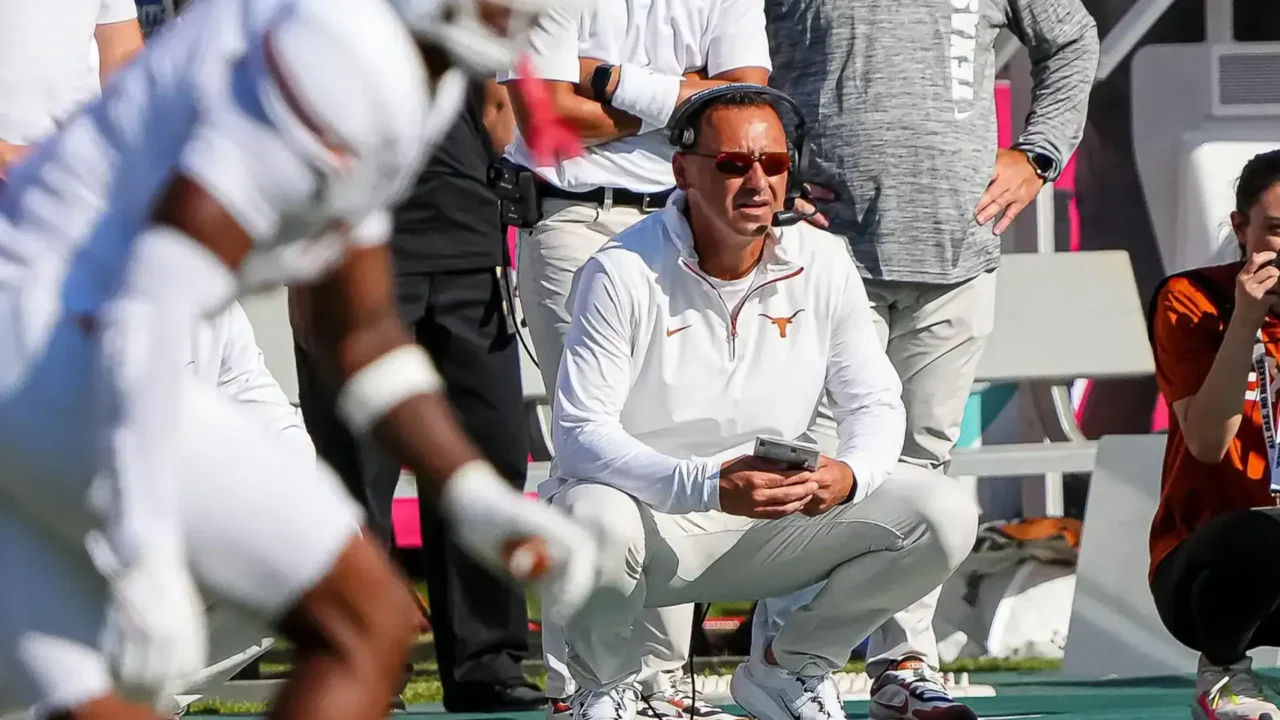
Texas mental mistakes surfaced in a 120-play second fall scrimmage and grabbed Steve Sarkisian’s full attention because they were mostly avoidable execution errors rather than physical shortcomings.
Sarkisian characterized portions of the offense as “mindless football,” saying alignment errors, wrong defenders being blocked and receivers running correct routes at the wrong depth left explosive plays on the field, as reported by Texas Longhorns On SI.
Key Takeaways
- The Longhorns‘ defense again outplayed the offense during the 120-play fall scrimmage.
- Coaches flagged alignment problems, wrong defenders being blocked, and receivers running correct routes at the wrong depth as primary execution failures.
- Steve Sarkisian attributed mental lapses and occasional lethargy to fatigue and a lack of competitive focus during the scrimmage.
- Those mistakes removed explosive passing options and must be corrected before the season opener against Texas State.
Why mental mistakes flared in the second fall scrimmage
The mistakes were varied and specific: false alignments, incorrect blocking assignments and route-depth errors recurred during live periods.
Those errors often appeared as mental slips where players ran the wrong depth or targeted the wrong defender rather than as schematic or purely physical failures.
Sarkisian said the offense was “running plays rather than playing football in a competitive setting,” and the scrimmage imposed live consequences where a missed block becomes a sack and a misread route removes explosive options.
How fatigue and prep cadence affected execution
The Longhorns spent most of preseason camp preparing for the physical demands of a long season, but Sarkisian said the offense still looked lethargic at times during the scrimmage.
He tied conditioning and mental readiness directly to on-field decision-making, saying “Fatigue makes cowards of us all” and warning that physical wear can fray the mental side.
Coaches must reconcile a scripted training cadence with the randomness of game moments where assignment clarity and competitive instincts determine whether a play becomes a big gain or a wasted opportunity.
Scrimmage context and execution comparison
| Scrimmage element | Observed in scrimmage | Coach implication |
|---|---|---|
| Overall outcome | 120-play session where the defense again outplayed the offense | Indicates the offense must tighten mental execution before live-game pacing |
| Execution errors | Alignment problems, wrong defenders blocked, receivers at incorrect route depths | Points to mental lapses and situational awareness deficits rather than schematic failure |
| Explosive-play potential | Missed opportunities in the passing game left explosive plays on the field | Requires cleaner reads and sharper timing under fatigue to convert opportunities |
How mental mistakes affect the opener and SEC outlook
With the season opener against Texas State on Sept. 5 approaching, the margin for error narrows and the Longhorns must convert practice corrections into reliable game habits.
From a roster-construction and preparation standpoint, coaches will prioritize assignment clarity, situational walkthroughs and conditioning that simulates late-game mental strain.