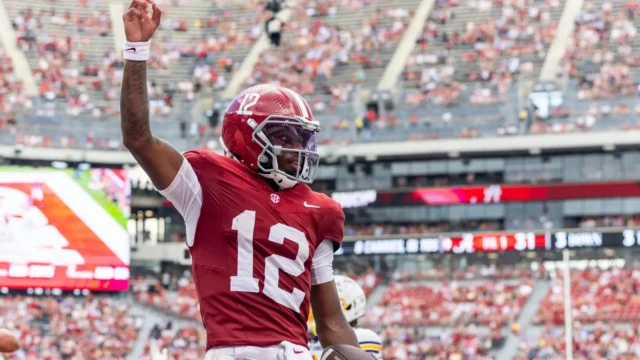

Thomas Castellanos is officially in the Texas Tech program after exiting the transfer portal, and the move arrives as a court-granted temporary injunction shields his eligibility for the upcoming season.
The signing matters because it removes immediate uncertainty for Tech at quarterback while broader court rulings and conference bans keep programs on edge; as detailed by CBS Sports, the legal picture is still unsettled and schools are monitoring options.
Key Takeaways
- Thomas Castellanos signed with Texas Tech out of the transfer portal and will be eligible to play this season because of a Kentucky temporary injunction.
- The injunction separates Castellanos from the Colorado ruling that removed eligibility for some athletes, leaving his status intact for now.
- Texas Tech gains depth at quarterback with Castellanos while keeping roster flexibility for other late additions as legal developments continue.
Thomas Castellanos signing and on-field profile
Thomas Castellanos arrives in Lubbock after an up-and-down but productive season at Florida State, where he completed 58.3 percent of his passes for 2,760 yards, 15 touchdowns and nine interceptions while adding 557 rushing yards and nine scores on the ground.
Castellanos transferred to Florida State from Boston College and played a key role in the Seminoles’ season, including their upset of Alabama in Week 1 last year.
After going undrafted, Castellanos participated with the Miami Dolphins at rookie minicamp as a wide receiver earlier this offseason, a detail that underlines his athletic versatility and the nontraditional path that followed his college quarterbacking.
At Texas Tech, the expectation is that Castellanos will back up the starter while providing a dynamic change-of-pace option; roster notes describe him as likely to serve in the backup role while the team remains open to other moves.
Legal rulings affecting eligibility and roster decisions
The recent Kentucky injunction is the decisive factor for Castellanos’ immediate eligibility, putting him outside the scope of the Colorado ruling that revoked eligibility for certain athletes who qualified in the Class of 2022.
Other courts have offered different outcomes: a Louisiana temporary restraining order recently covered a group of former college players and added more fluidity to who might re-enter the college ranks this fall.
Those mixed rulings have left coaches and compliance staffs scrambling for clarity, and programs are watching which decisions will hold under appeal or further litigation.
Texas Tech roster strategy and recruiting context
Texas Tech enters the season with a transfer class that national outlets have described as among the better groups this cycle, and adding Castellanos stabilizes depth at a high-leverage position without consuming a contested late-window spot.
Coaches around the sport are weighing the competitive and ethical trade-offs of adding former NFL players late, and some programs are publicly stating they will monitor the legal environment before making moves that could displace current rostered players.
The last day to add or drop classes for Texas Tech’s fall semester is Sept. 4, a calendar detail that factors into any decision to process roster additions and enrollments ahead of the season.
Legal rulings compared and immediate eligibility effects
| Ruling | Who it affected | Immediate effect on eligibility |
|---|---|---|
| Kentucky temporary injunction | Included Thomas Castellanos and Mark Mitchell | Preserves eligibility for covered players and prevents enforcement of the Colorado decision against them |
| Colorado ruling | Removed eligibility for certain qualified athletes in the Class of 2022 | Would strip eligibility from affected athletes absent separate court protection |
| Louisiana temporary restraining order | Included a group of 16 former college players | Created another path for some former players to challenge eligibility restrictions and seek return opportunities |
How late additions could shift SEC recruiting and CFP paths
Although Texas Tech plays in the Big 12, the ripple effects of these eligibility rulings extend across conferences because a sudden influx of formerly professional players into the transfer portal could change competitive balance and recruiting leverage nationwide, including for SEC programs eyeing College Football Playoff positioning.
Conferences that have moved to ban former NFL players from returning have also threatened suspensions for programs that disregard those policies, so any late additions carry both compliance risk and potential on-field benefit.
For teams with playoff aspirations, a single impactful late addition could alter depth charts and matchup planning, which is why athletic directors, conference offices and compliance teams are closely tracking ongoing litigation and related court orders and the linked reporting lays out the court and roster details staff are monitoring.