The LSU eligibility ruling issued by a federal judge has immediate roster consequences for the Tigers and a high-stakes legal confrontation with the conference.
As reported by LSU Tigers On SI, Judge William Jorden granted a temporary injunction against the NCAA and the SEC that allowed recent NFL signees to be listed on LSU’s roster ahead of the home opener against Clemson.
Key Takeaways
- Judge William Jorden granted a temporary injunction against the NCAA and the SEC ensuring protection for certain former NFL players to be listed at LSU.
- The injunction permitted Dae’Quan Wright and Zxavian Harris to be added to LSU’s roster and opened the door for an effort to add Blake Cotton.
- The SEC has filed a federal lawsuit alleging a violation of the conference’s First Amendment right to expressive association.
- The ruling could open a pathway for up to 40 recently NFL-ready players to pursue a return to college competition.
LSU eligibility ruling scope and roster changes
The temporary injunction targets conference and NCAA enforcement that previously barred programs from listing players who had been on NFL rosters.
The judge’s order specifically cleared the way for Dae’Quan Wright and Zxavian Harris to be placed on LSU’s roster, and reporting indicates the program is also aiming to add cornerback Blake Cotton from the Broncos.
The scope of the ruling was described as protecting the players as well as the coach and program from conference enforcement while the matter moves through the courts.
SEC allegations and legal next steps
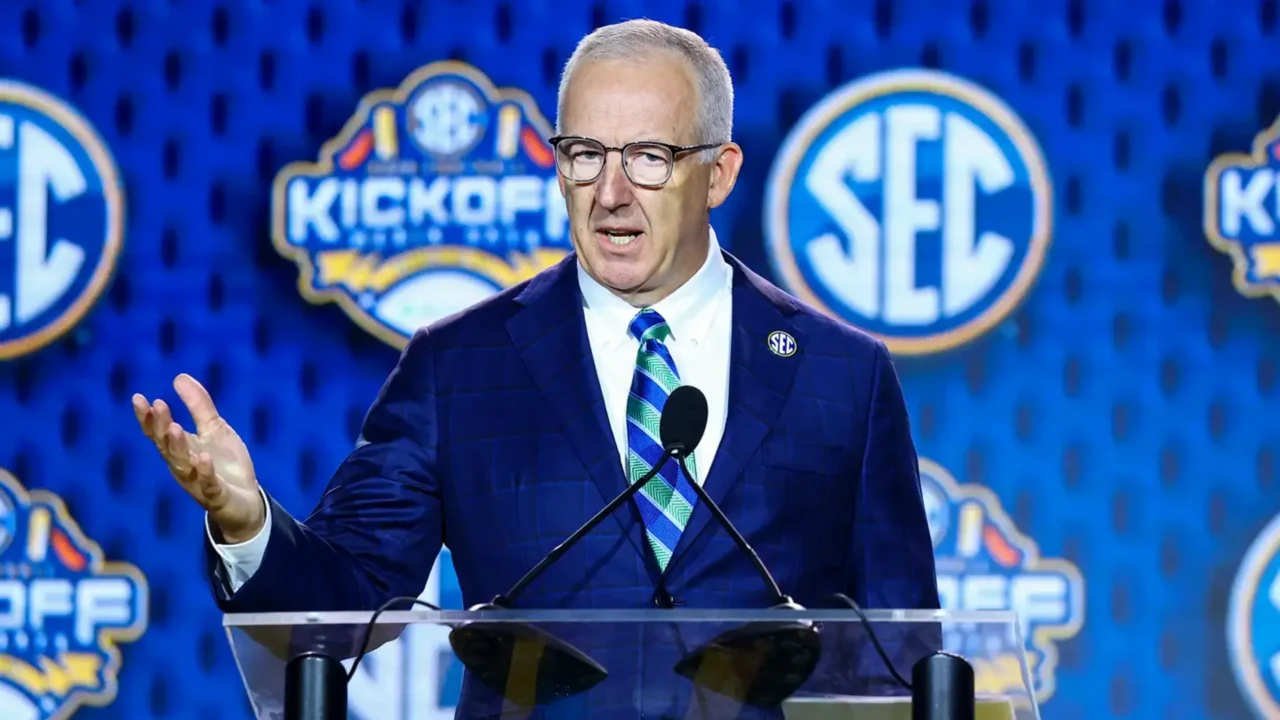
The SEC responded by filing a federal lawsuit against Lane Kiffin and LSU, alleging the program violated the conference’s First Amendment right to expressive association by listing former pro players despite a conference vote to block that practice.
Before the lawsuit, SEC member schools held a vote on whether to permit NFL players to appear on college rosters; every team other than LSU declined to cast a vote, producing a 15-0 result against allowing NFL players.
The lawsuit frames the matter as a breach of conference rules and signals that the SEC intends to use the federal courts to contest the injunction and to seek remedies or further enforcement actions.
Immediate roster questions and game-day impact
The injunction cleared the way for additions to the active roster for the scheduled home opener against Clemson, but it did not guarantee that every eligible player will appear on the field.
Coaches and staff face practical decisions about activation, depth-chart placement, and how quickly new additions can be integrated into game plans for a major nonconference opponent.
Beyond the two named signees, reporting referenced a potential pool of up to 40 players who could now pursue a return to college football under the legal protection provided by the injunction.
Roster comparison after the ruling
| Player or group | Pre-ruling status | Post-ruling status |
|---|---|---|
| Dae’Quan Wright | Signed with the Cleveland Browns and would previously have been barred from appearing on a college roster | Permitted to be listed on LSU’s roster under the temporary injunction |
| Zxavian Harris | Signed with the New Orleans Saints and likewise subject to prior conference prohibitions | Allowed to be added to LSU’s roster as part of the court’s order |
| Blake Cotton and other recent NFL players | Reported as being with the Broncos or recently NFL-ready and previously excluded by SEC policy | LSU is aiming to add Cotton and the ruling creates a potential pathway for a larger group of up to 40 players to return to college competition |
SEC recruiting and CFP implications
The 15-0 conference vote against allowing NFL players on college rosters establishes clear opposition among member institutions, but the injunction has upended that unanimity in practice.
Recruiting dynamics in the SEC could shift as prospects and recently professional players weigh where a return to college football is feasible; the ruling creates a legal pathway that could affect how and where such players pursue a return.
The ruling also raises questions for College Football Playoff positioning, as roster composition changes can alter short-term competitive balance and influence perceptions of program construction ahead of marquee nonconference games.
Conference leadership and individual schools now face legal and policy choices as litigation proceeds, and the SEC has signaled it will seek remedies through the courts.
The reporting that forms the basis of this piece was published by the linked original coverage and informed the timelines and facts presented above.