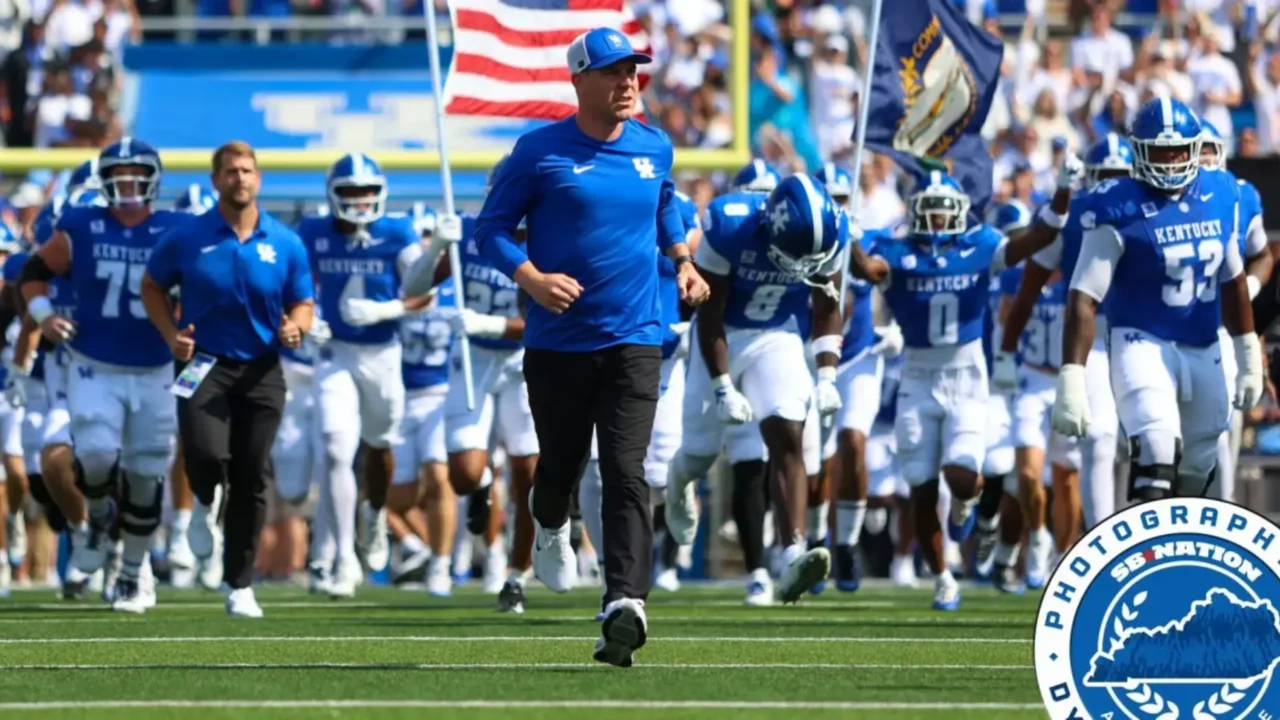
Kentucky Football bowl game prospects took a hit after a swing game that felt winnable at halftime but ended in a rout. The Wildcats carried a 17-13 lead into the break before the contest flipped dramatically in the third quarter.
A fan poll ran after the game asking if supporters still believe Kentucky will make a bowl this season, a timely gauge after that second-half collapse as shown in the original recap: A Sea Of Blue
Key Takeaways
- Kentucky lost to Alabama 45-17 after holding a 17-13 lead at halftime.
- Alabama responded with 32 unanswered points in the second half to take control of the game.
- Kentucky converted just 1 of 14 third downs and finished with 209 yards of total offense.
Kentucky Football bowl game outlook
The loss shifts the narrative for bowl eligibility but does not end prospects with 10 games left on the schedule. A single lopsided performance complicates the path, but the Wildcats’ remaining slate still contains winnable matchups.
The team must tighten situational execution and improve third-down efficiency to stay in most bowl conversations. The offense’s inability to sustain drives was the clearest mechanical issue on display against Alabama.
Second half collapse and offensive issues
Kentucky’s offense failed to sustain drives after halftime, turning manageable possessions into quick punts and three-and-outs. Converting just 1 of 14 third downs created a time-of-possession disadvantage that wore on the defense.
Finishing the night with 209 yards of total offense is a blunt diagnostic metric that points to schematic and execution gaps. Whether issues are personnel-driven or schematic will determine how quickly the staff can correct course heading into the next game.
Halftime lead to second half breakdown
Holding a 17-13 lead at the break showed the Wildcats could move the ball and defend in spurts, but the second half exposed depth and adjustment problems. Alabama’s 32 unanswered points highlight both a halftime-gameplan edge and Kentucky’s failure to respond to in-game adjustments.
From a coaching and situational perspective, the sequence of possessions after the break — punts, three-and-outs, and a lack of third-down conversions — allowed the Tide to seize and sustain momentum. Those sequence failures are the immediate coaching items to address on film review.
First Half versus Second Half Comparison
| Situation | First Half | Second Half |
|---|---|---|
| Score | Kentucky led 17-13 | Alabama outscored Kentucky 32-0 to finish 45-17 |
| Offensive performance | Produced scoring drives to reach 17 points | Offense stalled; totaled 209 yards and failed on third downs |
| Third down and situational play | Maintained enough efficiency to lead at the break | Converted 1 of 14 third downs, which undermined possession opportunities |
SEC impact on Kentucky’s bowl chances
The immediate SEC takeaway is simple: a loss like this increases the margin for error over the next 10 games. Kentucky still controls much of its destiny numerically, but the team must avoid a string of losses that would put bowl eligibility at risk.
Recruiting and roster conversations will reference this performance when projecting development, though one game rarely determines a full-term narrative. The program’s midseason adjustments, depth play, and how quickly younger players improve will be decisive for the rest of the SEC slate.
The figures above are drawn from the original fan poll and game recap; reporter Jason Marcum has covered the University of Kentucky since 2015, and the poll showed 58 total votes and was listed as closing in 2 days.