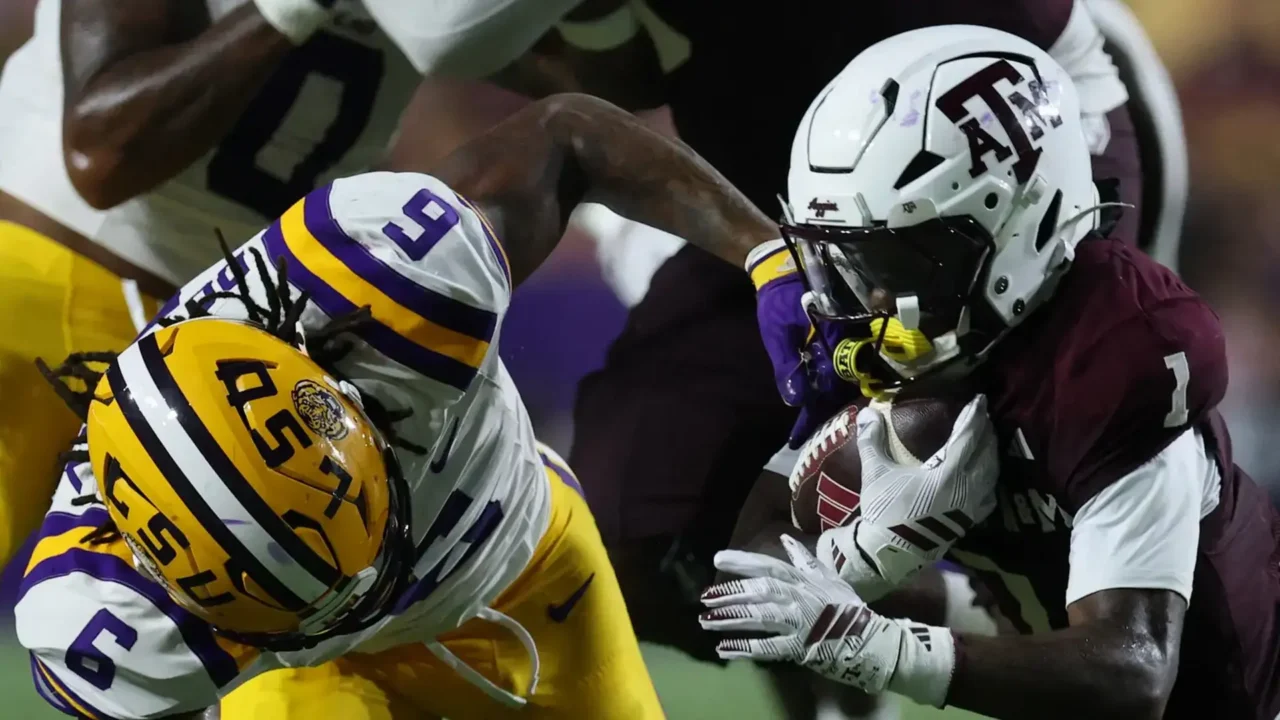
LSU vs Texas A&M mattered because the 35-6 outcome evened LSU’s SEC record and served as a corrective after the loss at Ole Miss.
The win produced clear risers and immediate concerns, from a safety who stepped into a new role to special-teams mistakes that could matter in close conference games; see the on-field breakdown and context from the primary coverage at LSU Tigers On SI.
Key Takeaways
- Tamarcus Cooley vaulted into the star safety discussion after recording an interception, a sack, and 11 yards in tackles for loss against Texas A&M.
- Jackson Harris emerged as a major downfield threat with 163 receiving yards and two touchdowns, including a 57-yard score on a 4th-and-1.
- Landen Clark provided clear value as a reserve, entering in the third quarter and finishing with two rushing touchdowns and 41 rushing yards.
- Special teams remain a concern after Eugene Wilson III’s lone punt return went for negative yardage, creating a potential liability in tighter games.
Tamarcus Cooley cements role at star safety
Cooley’s stat line — an interception, a sack and 11 yards in tackles for loss — reads like a player who handled a step up in responsibility.
He filled the star safety spot as Dashawn Spears remains out with a season-ending injury, and his blend of run support and playmaking altered how LSU defended the Aggies.
Defensive coordinator Blake Baker had to reconfigure nickel alignments after Spears’ exit, and Cooley’s performance suggests the staff found a trustworthy option rather than a temporary stopgap.
Jackson Harris and the passing game takeover
Harris forced attention all night, finishing with 163 receiving yards and two touchdowns to carry LSU’s vertical threat in the absence of other key contributors.
His 57-yard touchdown on a 4th-and-1 flipped field position and sustained the Tigers’ momentum late in the first half, and the playbook opened up when he started winning one-on-one matchups.
Coaches showed a willingness to live with contested throws downfield, and Harris looks set to see more looks after this display.
Running game, backup production and depth questions
Landen Clark entered in the third quarter and immediately changed the game’s rhythm, scoring on a 4-yard rushing touchdown on his first snap and later adding another rushing score to finish with 41 yards.
That production underlines Clark’s competence as a reserve option when LSU can manage the game clock and protect the lead.
At the same time, Jayce Brown’s line — zero yards on one target — was a missed opportunity in a game where receivers had space to work, and special-teams costs also surfaced when Eugene Wilson III’s single punt return went for negative yardage.
Player impact and roster context vs Texas A&M
| Player | Game highlights | Roster implication |
|---|---|---|
| Tamarcus Cooley | Interception, sack, 11 yards in tackles for loss | Credible option at star safety after Dashawn Spears’ reported season-ending injury |
| Jackson Harris | 163 receiving yards, two TDs, 57-yard TD on 4th-and-1 | Emerging vertical threat who expands LSU’s downfield identity |
| Landen Clark | Entered in third quarter, 4-yard rushing TD on first snap, two rushing TDs, 41 rushing yards | Reserve who delivered tangible scoring value and confidence |
| Jayce Brown | One target, zero yards | Missed chance to stake a claim for an expanded role in the receiver room |
| Eugene Wilson III | One punt return for negative yardage | Special-teams weakness that could hurt LSU in close conference games |
LSU implications for SEC standings and CFP positioning
The 35-6 victory evened LSU’s conference record and functioned as a corrective after the loss at Ole Miss, helping the Tigers reassert themselves in division conversation.
From a College Football Playoff perspective, the win repaired optics and demonstrated depth across key positions while exposing areas—like punt returns and receiver usage—that coaches will need to address ahead of tougher SEC matchups.