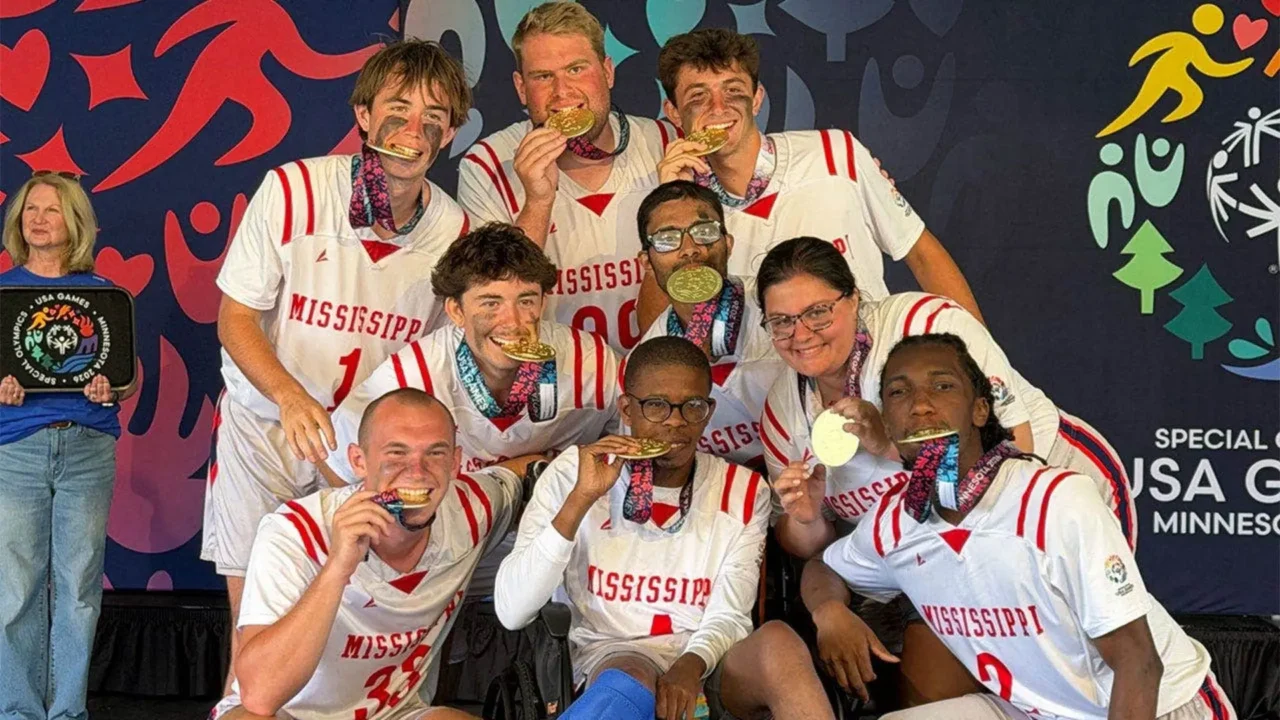
Oxford’s football fever has a new chapter this season as a different group of Rebels grabbed the spotlight over the summer. The Ole Miss Special Olympics flag football team returned from Minneapolis with a gold medal, as covered by Fox News
The run and the recognition on the sideline during a home game created a campus moment that stretched beyond the intramural fields and into the broader football conversation.
Key Takeaways
- The Ole Miss Special Olympics flag football team won a gold medal in Minneapolis after rallying from two early pool-play losses to claim the title.
- Nine players traveled to the tournament; the competition uses a 5-on-5 format with three athletes and two partners on the field at all times.
- Ole Miss earned the state berth by defeating Mississippi State and defeated Iowa in the championship game despite a serious injury to a key player during the final.
- Madison Dennis was the lone woman on the traveling roster and the gold medalists were honored on the Ole Miss sideline during a home game, generating visible campus support.
How the Rebels rallied to gold
The tournament arc tested the group early when Ole Miss dropped its first two pool-play games, but the club regrouped and advanced through the bracket to reach the championship. The comeback highlighted the team’s resilience and in-game adjustments.
Center Jason Skocy described how confidence and connection grew as the competition progressed, and coach Hunter Crabbs framed the approach as a simplified process that still relied on fundamentals: “It’s a much smaller playbook than what we might be using on Saturday night, but it’s a very similar process.”
A serious injury to a key player in the final put the team under pressure, but teammates and partners stabilized the effort and secured the victory that became an emotional high point for the program.
Team composition and club depth
Nine players made the trip to Minneapolis, while the Ole Miss intramural program fields enough participants to support at least six teams, creating a deep partner pool. That partner structure is essential to the 5-on-5 format and to the club’s competitive depth.
Madison Dennis, the lone woman on the traveling roster, emerged as a prominent voice about the trip’s social and competitive benefits, citing increased confidence and new relationships formed during the event.
Tournament path and program context
| Item | Verified context |
|---|---|
| How the trip was earned | Ole Miss defeated Mississippi State to earn the right to represent the state at the Special Olympics |
| Championship opponent | The final was against Iowa, a team that had beaten Ole Miss in pool play earlier in the tournament |
| Roster and format | Nine players traveled; the competition uses a 5-on-5 format with three athletes and two partners on the field |
| Program depth | Ole Miss intramural flag football has enough participants to field at least six teams, providing a robust partner pool |
SEC recruiting and roster implications
The gold medal run and the public recognition on game day amplified the program’s visibility and created positive energy around Ole Miss football culture. That visible community support can matter to recruits and families assessing a program’s campus environment and student engagement.
Players and partners described increased confidence and deeper friendships that translate into daily practice energy and stronger roster relationships, which can assist coaches in building team cohesion and in-person recruiting conversations.