
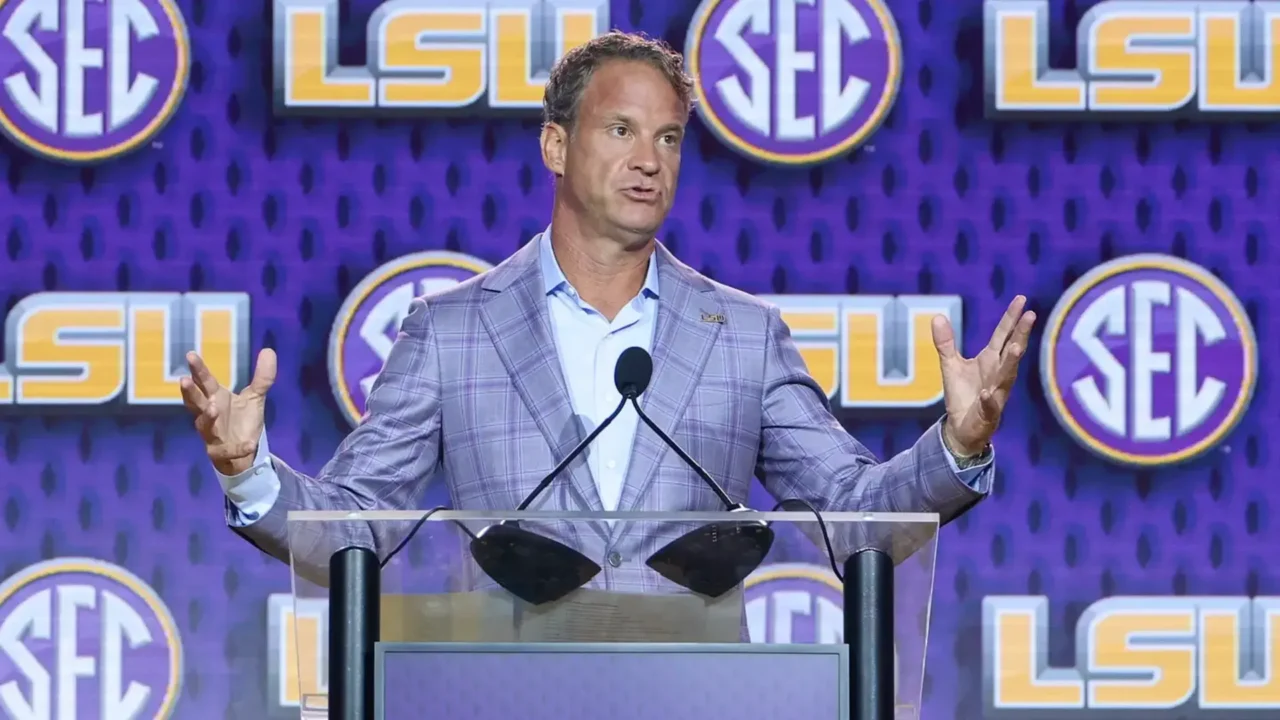
The SEC ban on former professional players landed as an immediate roster blow for LSU, removing three announced additions who had drawn national attention. The policy forces a rapid recalibration of depth plans in football and men’s basketball and requires the program to revisit recent public roster moves.
As detailed by LSU Tigers On SI, the policy bars athletes who previously declared for the NFL, NBA, or WNBA Draft without properly withdrawing, those who signed professional contracts, or players who have been listed on professional rosters.
Key Takeaways
- The SEC voted unanimously to ban former professional athletes from joining conference rosters in football and basketball.
- The policy prevents Dae’Quan Wright, Zxavian Harris and RJ Luis from joining LSU despite prior announcements of their additions.
- The conference granted the Commissioner authority to enforce eligibility rules and impose penalties against member institutions.
- Notre Dame and the Big 12 have adopted similar measures and the ACC is expected to follow, producing broader alignment among major programs.
How the SEC ban on former professional players bars LSU additions
The policy language is categorical: athletes who declared for a professional draft without withdrawing, signed pro contracts, or appeared on pro rosters are ineligible to join SEC team rosters. That formulation directly affects the recently announced additions LSU had publicized, including former Cleveland Browns tight end and ex-Ole Miss player Dae’Quan Wright, defensive tackle Zxavian Harris, and former NBA and UMass guard RJ Luis.
Immediate roster fallout for LSU
The blocked additions represent both tactical and perception hits for LSU. On the field, Wright and Harris had been positioned to add veteran-level depth and competition at tight end and defensive tackle, while Luis was expected to bolster the men’s basketball perimeter rotation.
LSU still retains returning contributors at those positions, notably tight end Trey’Dez Green, but the loss of the newly announced transfers reduces the margin for error in roster planning. The program will need to rely on returning players, pending recruits, and conventional transfer targets who meet the new eligibility standard.
Legal and enforcement context around the policy
Reporting on the vote noted the possibility of legal challenges from affected players, though no formal litigation has been presented in the coverage. The rule’s immediate effect is administrative and eligibility-based, allowing institutions to see previously announced roster moves reversed quickly.
Because the conference tied enforcement directly to Commissioner authority, schools must weigh competitive impulses against the risk of institutional sanctions. Athletic departments and compliance officers will therefore play a central role in vetting future additions under the new standard.
Conference policy comparison
| Conference | Current posture | Enforcement note |
|---|---|---|
| SEC | Unanimous vote to ban former professional athletes from football and basketball rosters | Commissioner authorized to enforce the rule and impose penalties against institutions |
| Notre Dame | Adopted a similar rule limiting former professionals from joining rosters | Institutional stance aligns with recent restrictions adopted by power conferences |
| Big 12 | Implemented comparable restrictions on former professionals joining rosters | Policy mirrors other major conferences adjusting eligibility rules |
| ACC | Expected to adopt a similar policy | Reported posture indicates forthcoming alignment with peer conferences |
SEC eligibility shift alters LSU roster construction and CFP math
The enforcement direction from the conference changes how coaches and staff prioritize roster building, placing greater weight on eligibility certainty rather than headline signings. With the Commissioner authorized to act, LSU and peer programs must assume tighter vetting for any player with a professional history.
From a recruiting perspective, the rule elevates the value of in-conference development and the conventional transfer portal, since a subset of veteran players is now uniformly off-limits to SEC schools. That narrows one pathway for immediate experience infusion and may shift strategy toward longer-term player development and selective portal recruiting.
On the College Football Playoff front, the rule removes one route some programs had used to pursue rapid roster upgrades and establishes a more uniform eligibility baseline across affected conferences. The net impact on year-to-year competitive balance will depend on how teams adapt their roster-building models in response.