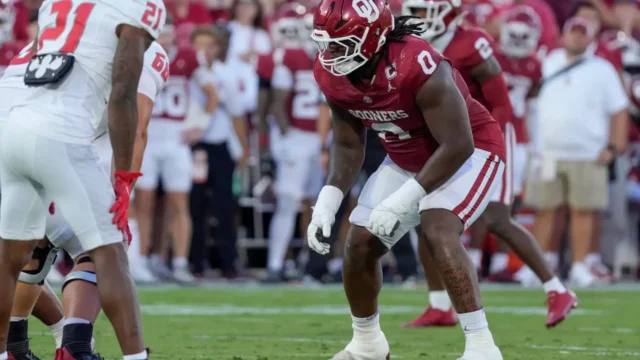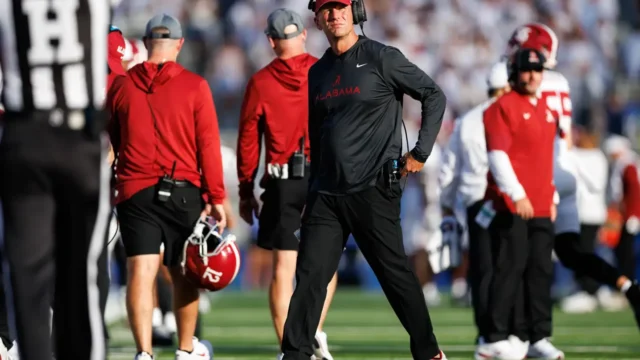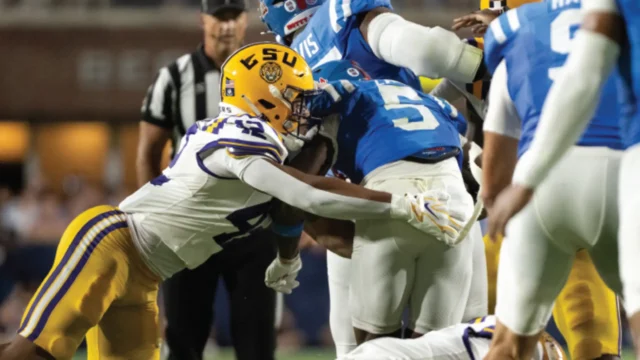
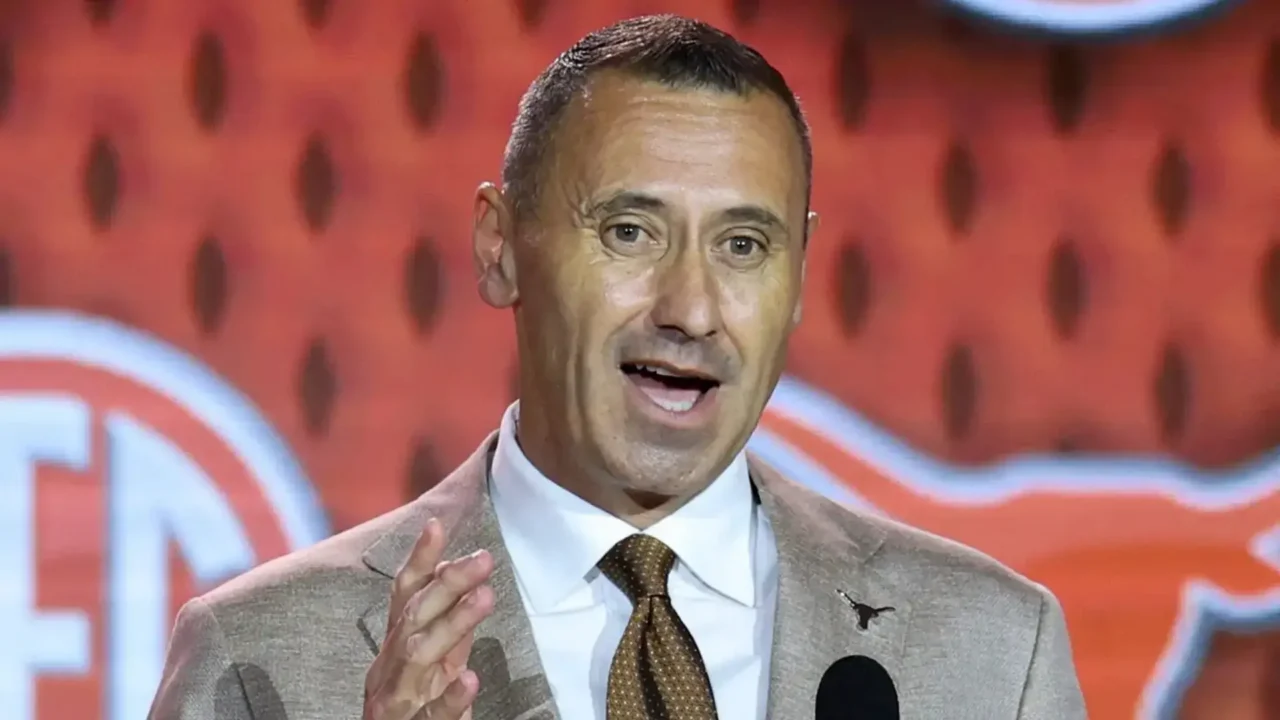
Texas NFL pipeline progress has become a measurable yardstick for Steve Sarkisian as he builds the program’s NFL presence alongside on-field goals. The coach framed growth in raw roster representation — not just draft picks — as a long-term signal recruits and evaluators track.
That wider view was laid out in reporting by Texas Longhorns On SI, which captured Sarkisian’s assessment that the program currently has 45 players on active NFL rosters and that his next objective is getting into the 50s.
Key Takeaways
- Sarkisian said Texas currently has 45 players on active NFL rosters, with four on injured reserve.
- All six Longhorns selected in the 2026 NFL Draft made their teams’ initial 53-man rosters.
- Undrafted edge rusher Ethan Burke signed with the Baltimore Ravens and survived roster cuts to earn a spot.
Texas NFL pipeline growth under Sarkisian
Sarkisian has prioritized player development as a core program mandate and uses alumni in the NFL as a measurable outcome. He referenced the program’s mid-2000s production as a benchmark and set a concrete target of getting into the 50s for players on active rosters.
Roster representation serves as both a recruiting pitch and an internal metric for how position coaches, strength staff, and scheme preparation convert into pro readiness. That dual purpose shapes staff goals and resource allocation without introducing new statistics.
2026 Longhorn NFL outcomes and player notes
The 2026 cohort offered immediate validation on two fronts: draft placement and undrafted persistence. Sarkisian noted that every Longhorn selected in the 2026 NFL Draft made an initial 53-man roster, which highlights the class’s ability to translate into immediate NFL opportunities.
The drafted group includes Anthony Hill Jr. with the Tennessee Titans; Malik Muhammad, Trey Moore, Michael Taaffe and DJ Campbell with the Miami Dolphins; and Jack Endries with the Cincinnati Bengals. Those placements provide recent examples the staff can point to in recruiting conversations.
Undrafted edge rusher Ethan Burke signed with the Baltimore Ravens and made their roster out of camp, highlighting how development can create opportunities even for players who go undrafted. Sarkisian framed these outcomes as evidence that the program’s preparation can open multiple entry points into the NFL.
NFL roster counts and recent outcomes
| Category | Verified detail |
|---|---|
| Program NFL roster count | Texas currently has 45 players on active NFL rosters, with four additional players listed on injured reserve |
| 2026 drafted class outcomes | All six Longhorns selected in the 2026 NFL Draft made their teams’ initial 53-man rosters |
| Undrafted free-agent success | Ethan Burke signed with the Baltimore Ravens as an undrafted free agent and survived roster cuts to earn an opportunity |
NFL pipeline bolsters Texas recruiting and College Football Playoff push
Visible NFL outcomes give the staff a clear recruiting message that cites specific names and roster spots rather than abstract promises. That clarity helps when competing against programs that emphasize pro-ready pedigrees in their pitch meetings and on the trail.
From a roster-construction angle, steady NFL departures require depth planning and succession work to replace high-level talent while validating coaching methods when former players stick on NFL rosters. The staff’s balancing act is producing pro-ready starters while maintaining enough returning production to sustain conference runs and College Football Playoff ambitions.