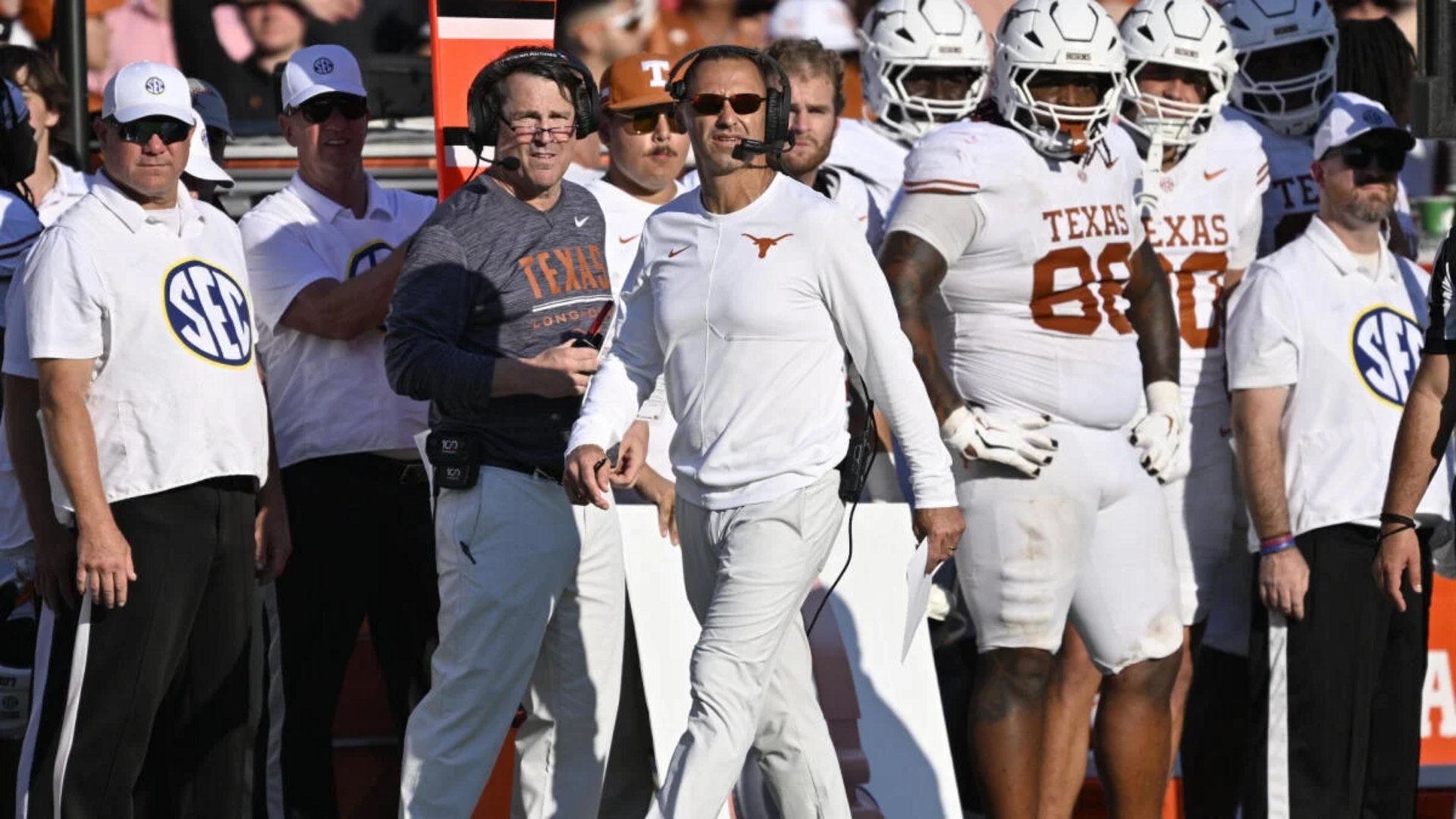
Steve Sarkisian Texas play-calling will remain unchanged after Texas absorbed a 27-24 loss to Oklahoma in the Red River Rivalry. Sarkisian rejected the idea of stepping away from the offense after a defeat that exposed problems in execution (via CBS Sports).
Texas gave up a blocked-punt touchdown and a defensive touchdown, while the offense produced seven three-and-outs. The combination turned a tight rivalry game into an immediate test of accountability and consistency.
Sarkisian also dismissed any suggestion that Jeff Banks’ special-teams responsibilities should change. Texas is choosing continuity, with Florida, Ole Miss and Mississippi State next on the schedule.
Key Takeaways
- Steve Sarkisian said “Not a chance” when asked whether he would reconsider calling the offense after the Oklahoma loss.
- Texas allowed a blocked-punt touchdown and a defensive touchdown, while Jeff Banks’ responsibilities remain unchanged.
- The Longhorns went three-and-out seven times, and Arch Manning threw two interceptions in the rivalry loss.
- Florida, Ole Miss and Mississippi State are next, giving Texas an immediate chance to improve its execution.
Steve Sarkisian Texas Play-Calling Remains a Confidence Decision
The decision to keep Sarkisian calling plays is both a statement of confidence and a direct acceptance of responsibility. When asked whether he would step away from his dual role, he answered, “Not a chance,” before adding, “We have to play better.”
That response places the burden on execution rather than a staff change. Texas did not simply lose a close rivalry game because of one possession; the Longhorns repeatedly failed to sustain drives, leaving the defense and special teams with little room for error.
Texas went three-and-out seven times against Oklahoma. The Longhorns also averaged 1.63 points per possession across their first two conference games, a figure that makes every turnover and field-position mistake more damaging.
The offensive concern is consistency. Sarkisian’s answer does not eliminate questions about the play-calling, but it makes the next stretch a direct evaluation of whether the current approach can produce better down-to-down results.
Texas Special Teams Failures Put Jeff Banks Under Pressure
The special-teams problems are separate from the play-calling debate, but they created the conditions for Oklahoma’s upset. A blocked punt was returned for a touchdown, and the Sooners also scored a defensive touchdown.
It was the second consecutive game in which Texas suffered a significant special-teams failure. That pattern has increased pressure on the unit even though Sarkisian has kept Banks’ responsibilities intact.
Sarkisian said Texas had missed opportunities on special teams. He also framed the correction as his responsibility rather than signaling a change in the staff structure.
That public support keeps the approach stable, but it places more pressure on preparation and technique. Texas cannot afford another avoidable special-teams mistake while the offense is still searching for its best form.
Arch Manning Errors Turned a Tight Rivalry Game
Arch Manning’s mistakes became the most visible part of the offensive collapse, but reducing the loss to one player would miss the broader issue. Manning threw two interceptions, including a third-quarter pick-six and a late interception on a pressured pass.
Those plays mattered because the offense had not built enough consistency to absorb them. Seven three-and-outs left little margin for a quarterback navigating pressure in a rivalry environment.
The result points to an offense that needs cleaner protection, better decisions and more reliable production around its quarterback. Sarkisian will need to help Manning find manageable situations without stripping away the aggression expected from the system.
Texas Offense and Special Teams Show Different Failure Points
| Area | Verified issue | Why it matters |
|---|---|---|
| Texas offense | Seven three-and-outs against Oklahoma and 1.63 points per possession in the first two conference games | Short possessions reduce scoring opportunities and increase pressure on the defense and special teams |
| Texas special teams | Blocked-punt touchdown against Oklahoma and a defensive touchdown allowed | Direct points and field-position swings can decide a close rivalry game |
| Quarterback execution | Two interceptions by Arch Manning, including a pick-six | Turnovers erased opportunities in a one-score loss |
| Coaching response | Sarkisian kept play-calling duties and left Banks’ responsibilities unchanged | Continuity gives Texas an immediate chance to correct the problems without a midseason reshuffle |
Texas SEC Standing and Playoff Margin Now Depend on Cleaner Execution
Texas is 4-1 overall, so the Oklahoma loss did not erase the Longhorns’ major objectives. It did reduce the margin for another performance marked by stalled drives, turnovers and special-teams breakdowns.
Florida, Ole Miss and Mississippi State are next. Those games give Texas three immediate opportunities to improve its offensive rhythm, protect possessions and stabilize the kicking game.
College Football Playoff positioning is a projection rather than a confirmed outcome at this stage. Texas’ ability to remain in that discussion will depend on whether the Longhorns turn Sarkisian’s confidence in the current structure into cleaner execution.
As detailed by CBS Sports, Sarkisian will continue calling the offense, and Banks’ responsibilities will remain unchanged. The next three games will show whether that continuity produces correction.