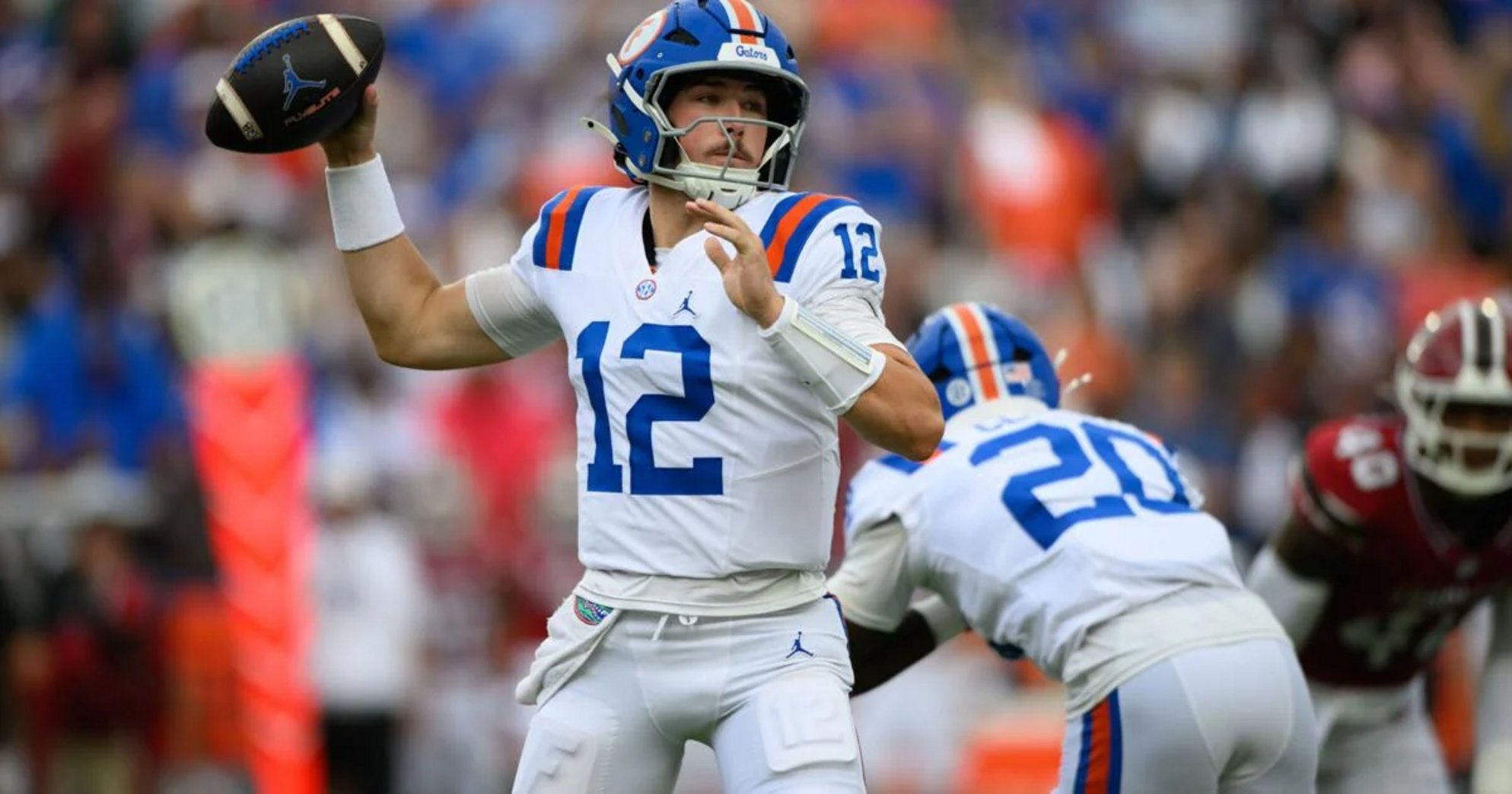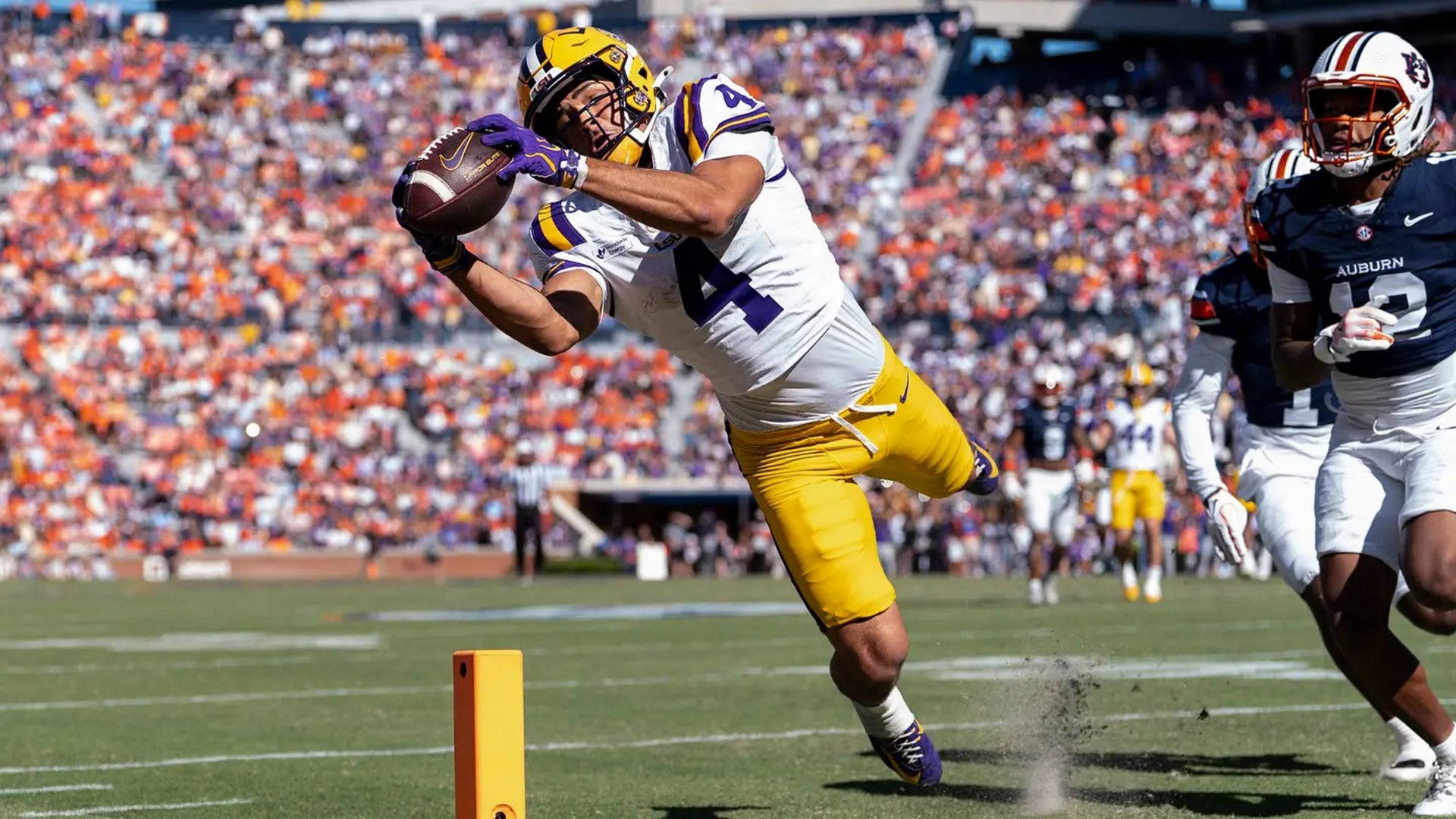
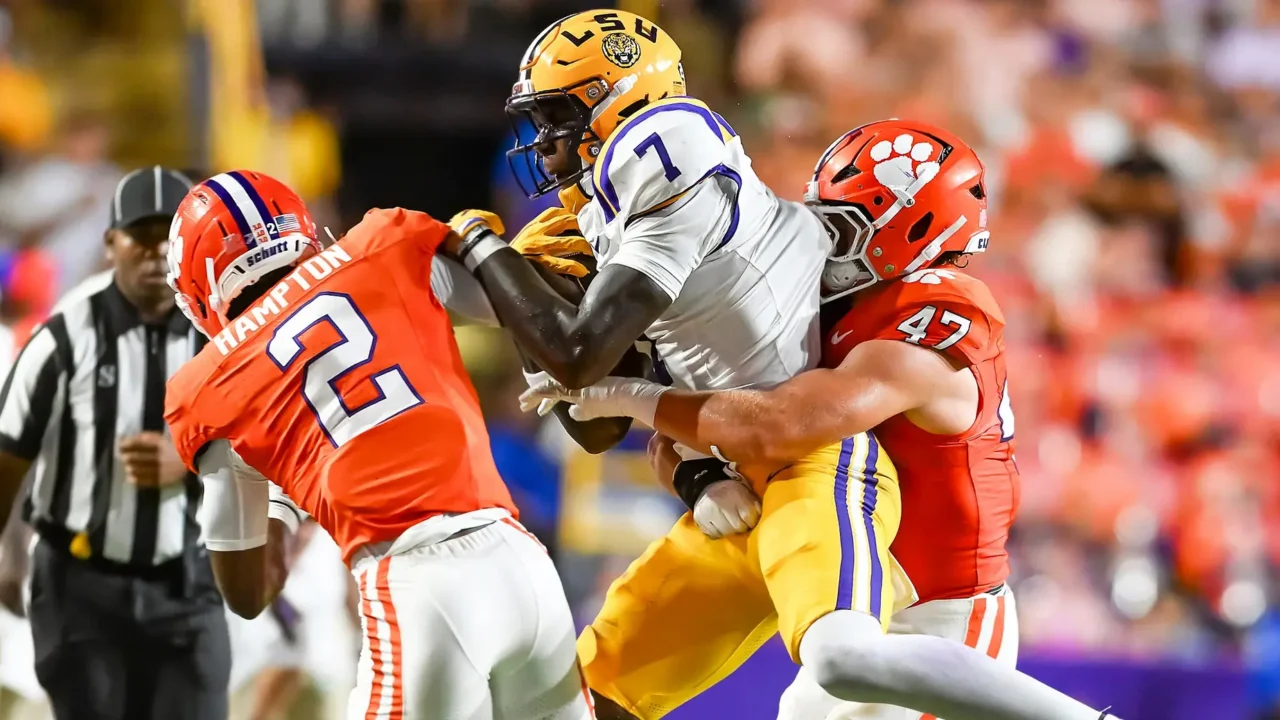
- LSU defeated Clemson 51-10 in the season opener in Baton Rouge.
- Sam Leavitt totaled 343 combined yards and three touchdowns, including a 32-yard touchdown pass to Winston Watkins Jr.
- LSU amassed 644 total yards; Dilin Jones rushed for 114 yards and two touchdowns while Clemson managed one first down in the first half.
The LSU vs Clemson season opener turned into a one-sided statement game in Baton Rouge as LSU rolled to a 51-10 victory and controlled the tone from the opening quarter. The margin and manner of victory highlighted LSU’s explosive plays and a stalling Clemson offense that failed to sustain drives.
Sam Leavitt’s debut with his new program set the table for the rout, and the game recap from On3 provides the play-by-play detail and box score context that framed the Tigers’ performance.
Key Takeaways
- LSU defeated Clemson 51-10, a decisive opening-night result that showcased LSU’s offensive firepower and Clemson’s inability to sustain drives.
- Sam Leavitt totaled 343 combined yards and three touchdowns in his first game with LSU, including a 32-yard touchdown pass to Winston Watkins Jr.
- Clemson trailed 31-3 at halftime after managing one first down, averaging 1:28 time of possession in the first half and producing five three-and-outs in eight drives.
- LSU amassed 644 yards of offense and controlled the game’s tempo with long, productive drives and a balanced rushing attack.
How LSU vs Clemson season opener unfolded
The game swung early and decisively. Clemson briefly stunned the stadium by intercepting Leavitt on the second play, but that turnover produced only a 49-yard field goal.
LSU answered with sustained drives and high-impact scoring that erased the early scare. A 12-play, 89-yard drive that ended on a direct snap to Dilin Jones gave LSU a lead and set the tone for a night when Clemson could not find offensive traction.
Sam Leavitt breakout performance
Leavitt finished with 343 combined yards and three touchdowns, a stat line that matched the feel of the game: decisive and multifaceted. He supplied the early physical edge with two rushing touchdowns that widened LSU’s lead, and he later hit Winston Watkins Jr. on a 32-yard touchdown throw in the second half that effectively closed the book.
Beyond the touchdowns, Leavitt maintained pace and balance for the Tigers’ offense, repeatedly flipping field position and converting explosive plays that Clemson struggled to answer. That ability to mix runs and play-action kept Clemson on its heels throughout the evening.
Dilin Jones and LSU ground control
Dilin Jones carried a heavy workload, finishing with 114 yards and two touchdowns on 23 carries. He accounted for 45 yards on the signature 12-play drive that opened LSU’s scoring and later scored on a 12-yard rush that extended LSU’s advantage to an overwhelming margin.
The ground game complemented Leavitt’s dynamic play-making, sustaining drives and chewing clock while setting up play-action opportunities. That balance produced consistent gains and helped LSU average 6.9 yards per play on the night.
Clemson first-half collapse and quarterback rotation
Clemson’s attack collapsed almost immediately after the early takeaway. The Tigers produced one first down in the first half and posted five three-and-outs in eight possessions before halftime left them down 31-3.
Quarterback Christopher Vizzina struggled enough that true freshman Tait Reynolds was inserted late in the first half and handled most of the second-half work before Vizzina returned to finish. The rotation did not spark the offense, which finished the game with 105 passing yards, 40 rushing yards and a 1-for-13 mark on third downs.
Drive and first-half comparison table
| Metric | Clemson | LSU |
|---|---|---|
| Halftime score | 3 | 31 |
| First-half drive outcomes | One first down and five three-and-outs in eight drives | 12-play, 89-yard drive for an early TD that set momentum |
| Total offense (game) | 145 yards (105 passing, 40 rushing) | 644 total yards |
| Yards per play (game) | 3.0 | 6.9 |
| Third-down conversions (game) | 1-of-13 | 11 conversions |
SEC and CFP implications after LSU vs Clemson season opener
A dominant non-conference win of this magnitude reshapes early perception for LSU and raises questions about Clemson’s readiness to compete at a high level this season. For LSU, the performance provides a recruiting and momentum boost that will be referenced when future visitors and recruits evaluate the program’s trajectory.
Clemson’s offensive failings on opening night, combined with continued struggles to sustain drives, create immediate pressure on a unit that must correct fundamentals and third-down execution quickly. The result also factors into early College Football Playoff considerations by bolstering LSU’s résumé and exposing areas Clemson must fix to remain in contention in its own path forward.
| Result | LSU defeated Clemson 51-10 |
|---|---|
| Sam Leavitt stat line | 343 combined yards and three touchdowns |
| Signature drive | 12-play, 89-yard drive |
| LSU total offense | 644 total yards |
| Dilin Jones stat line | 114 yards and two touchdowns |
Frequently Asked Questions
What was the final score?
LSU defeated Clemson 51-10.
How many total yards did LSU have?
644 total yards.